Émilie Lemardeley
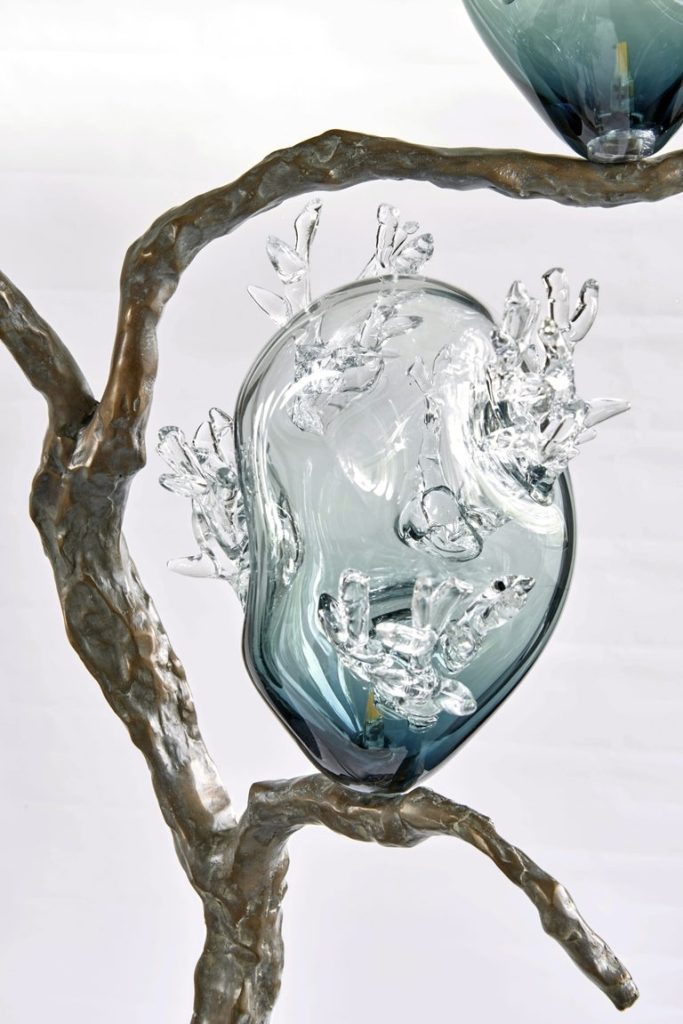
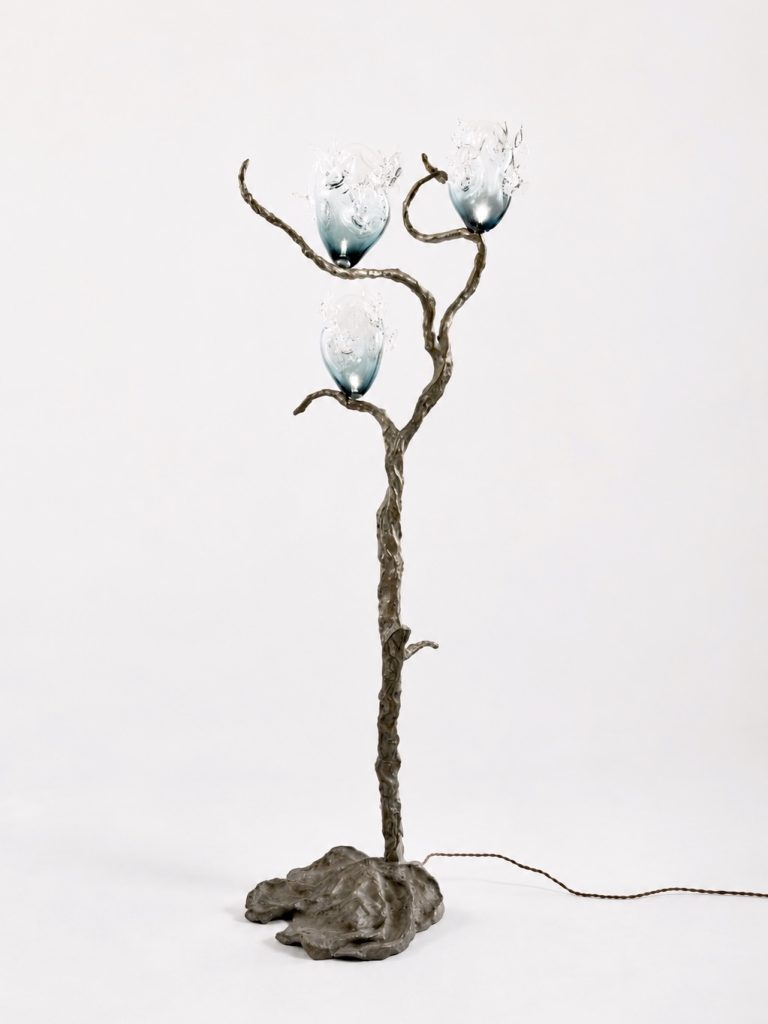
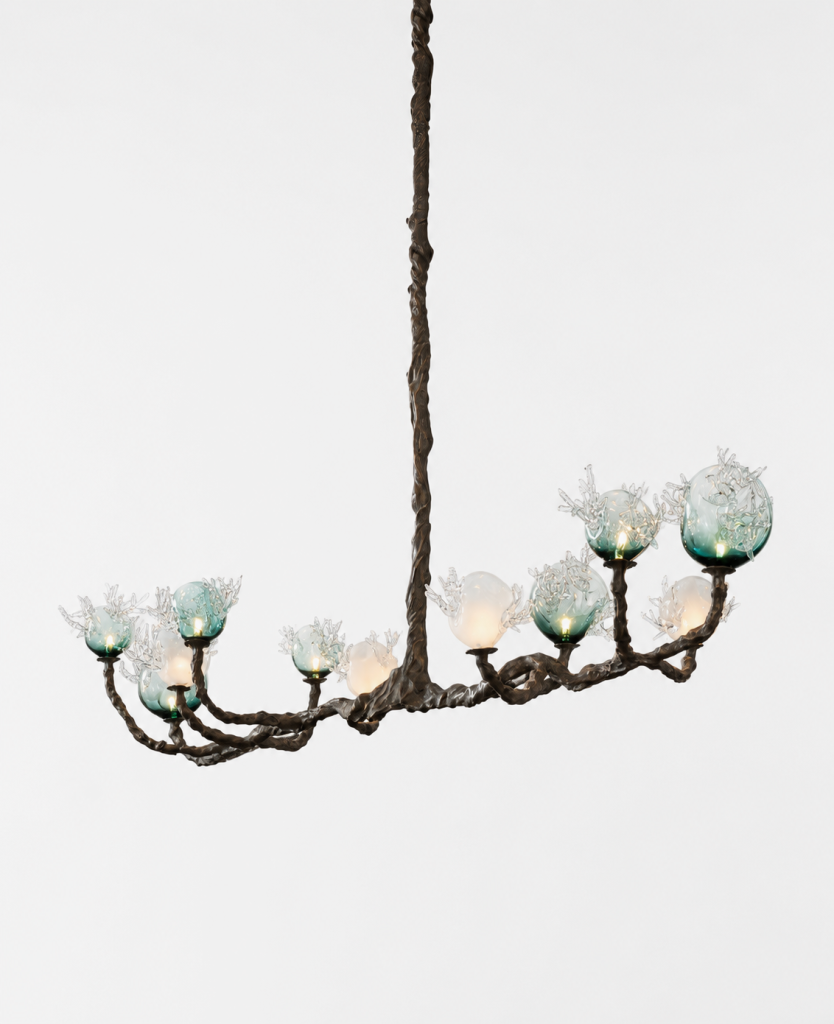
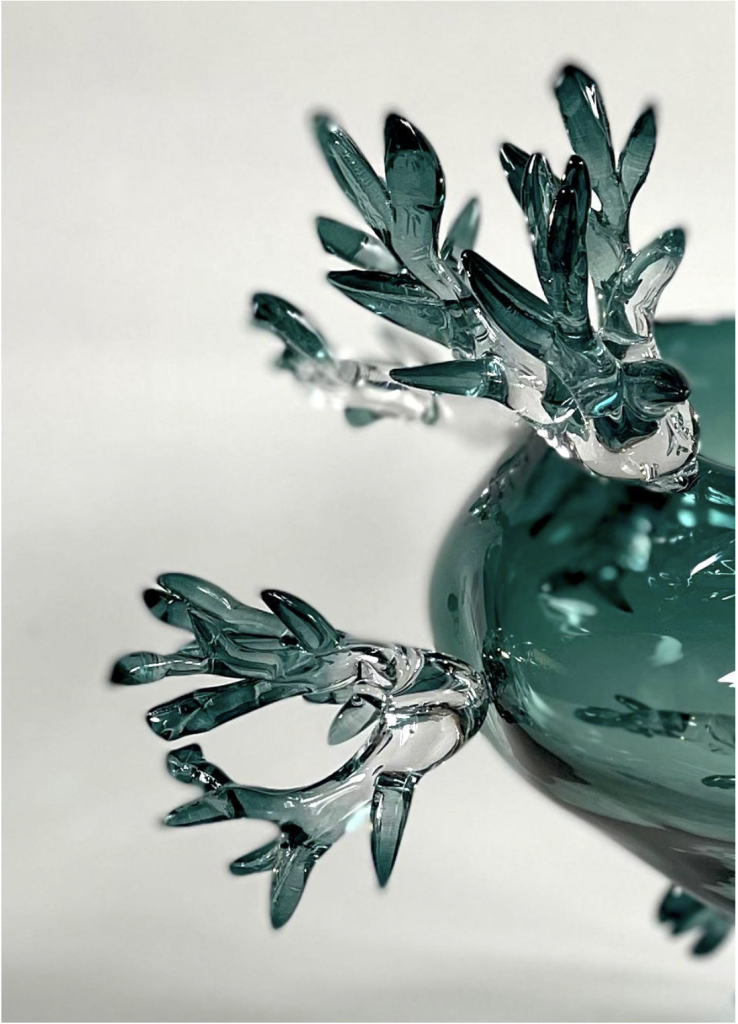
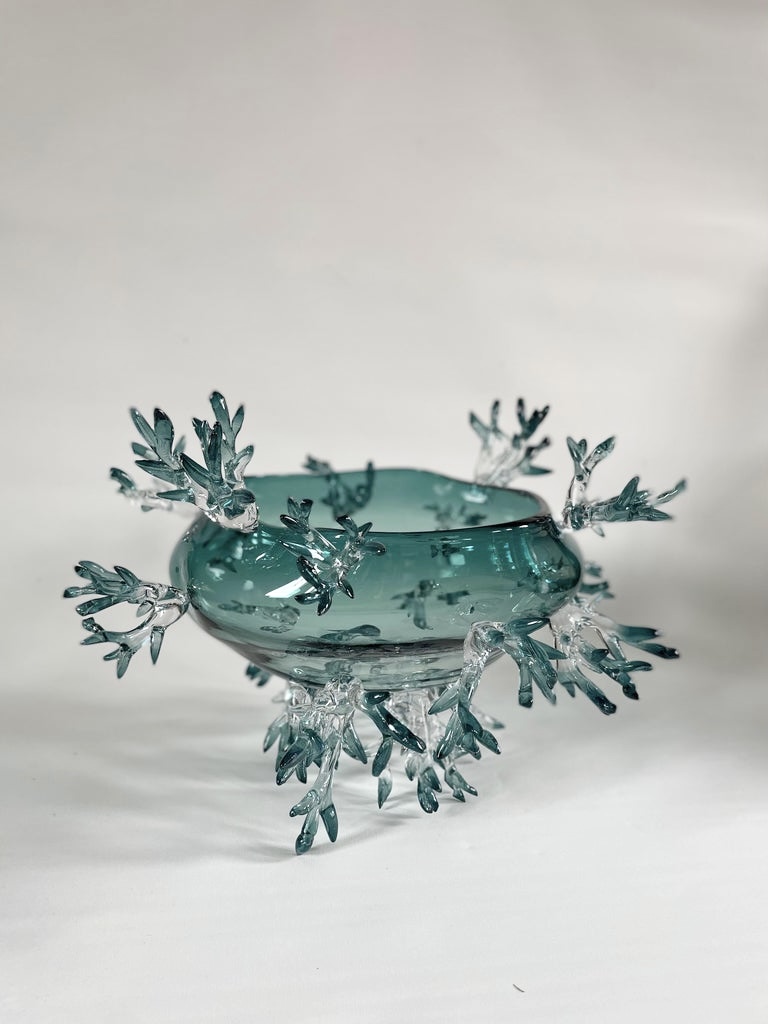
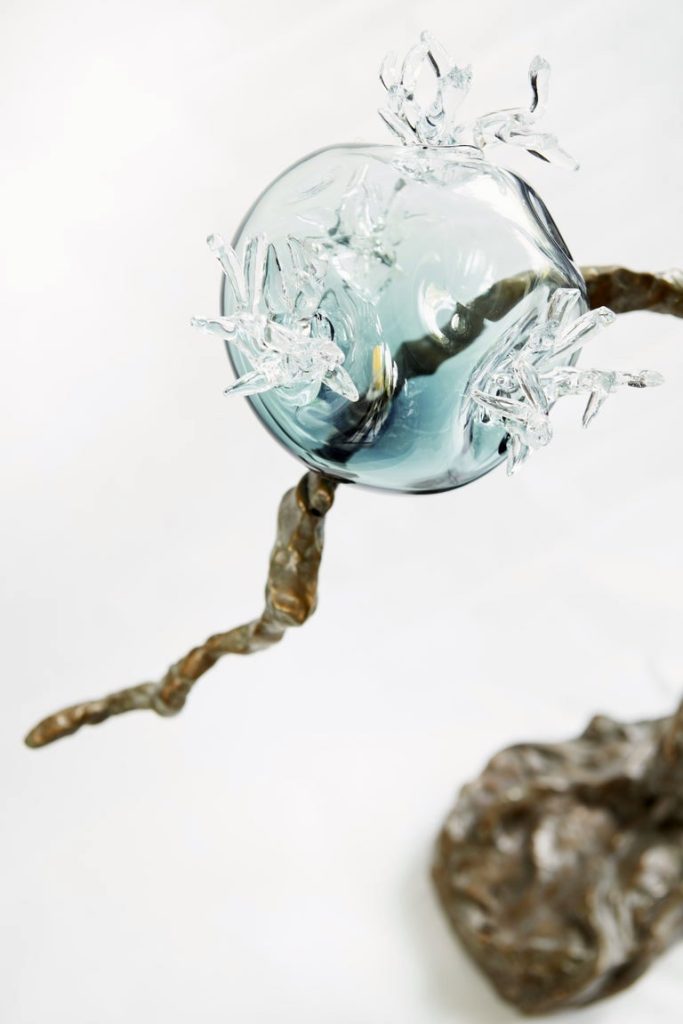
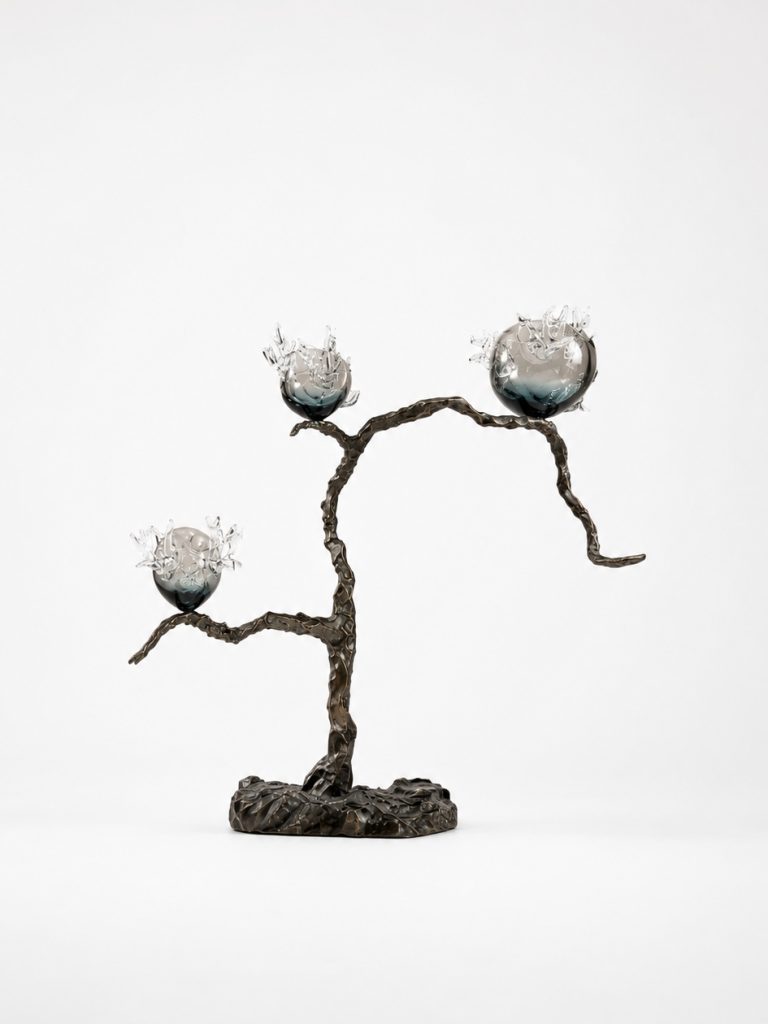
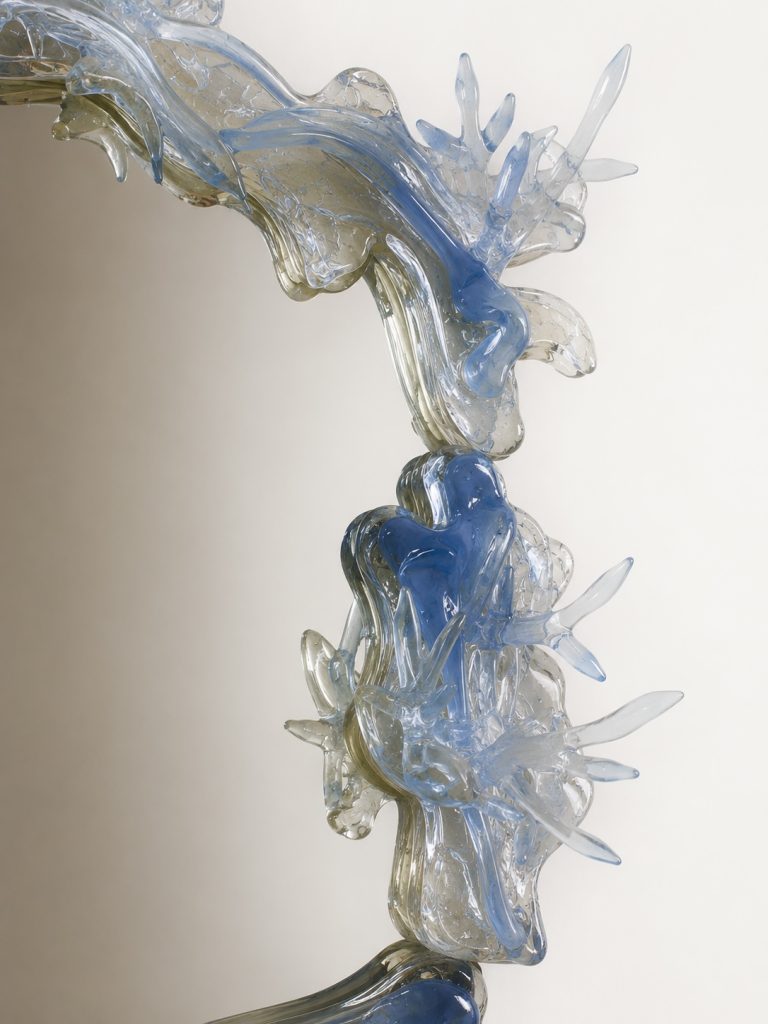
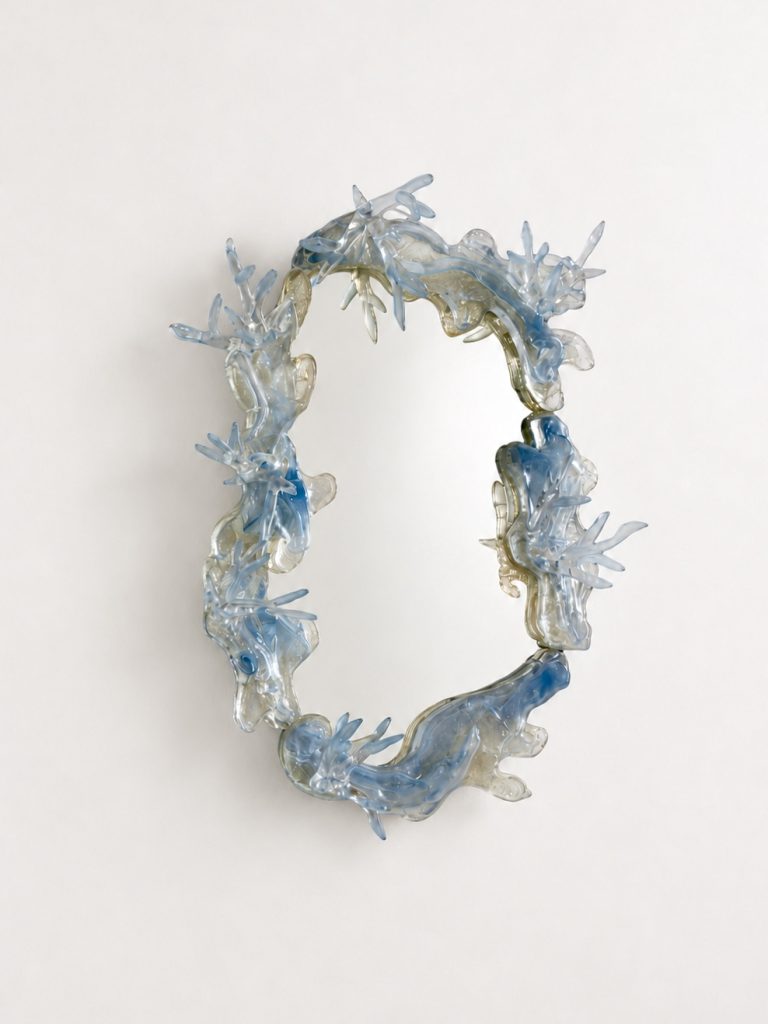
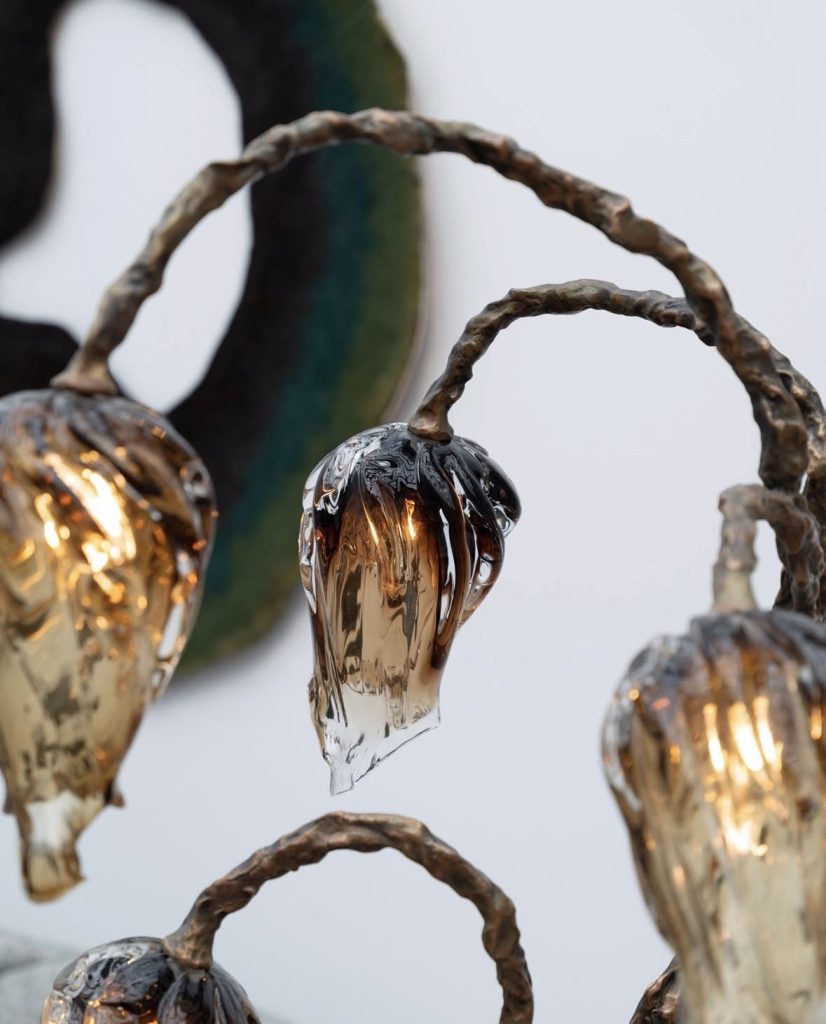
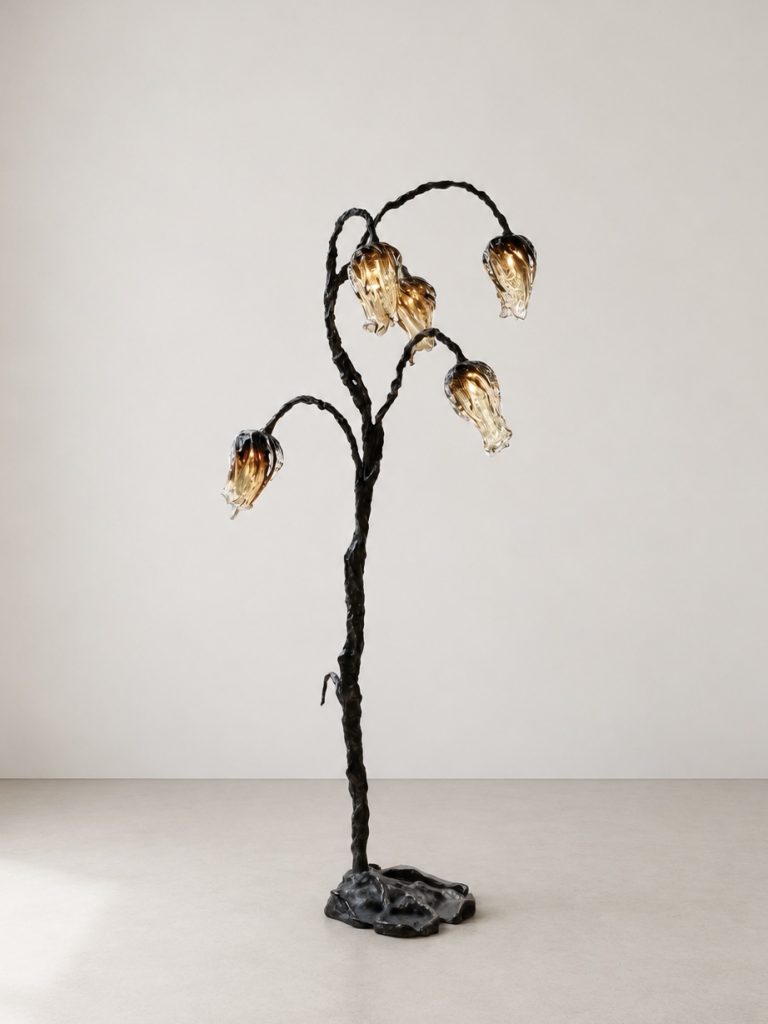
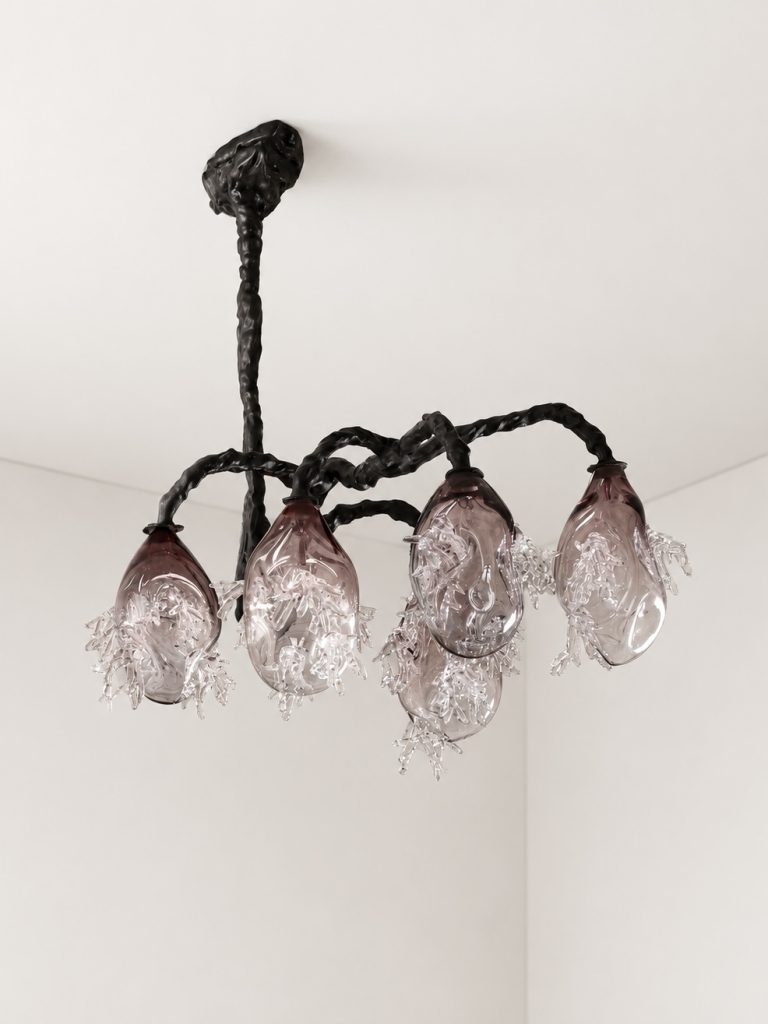
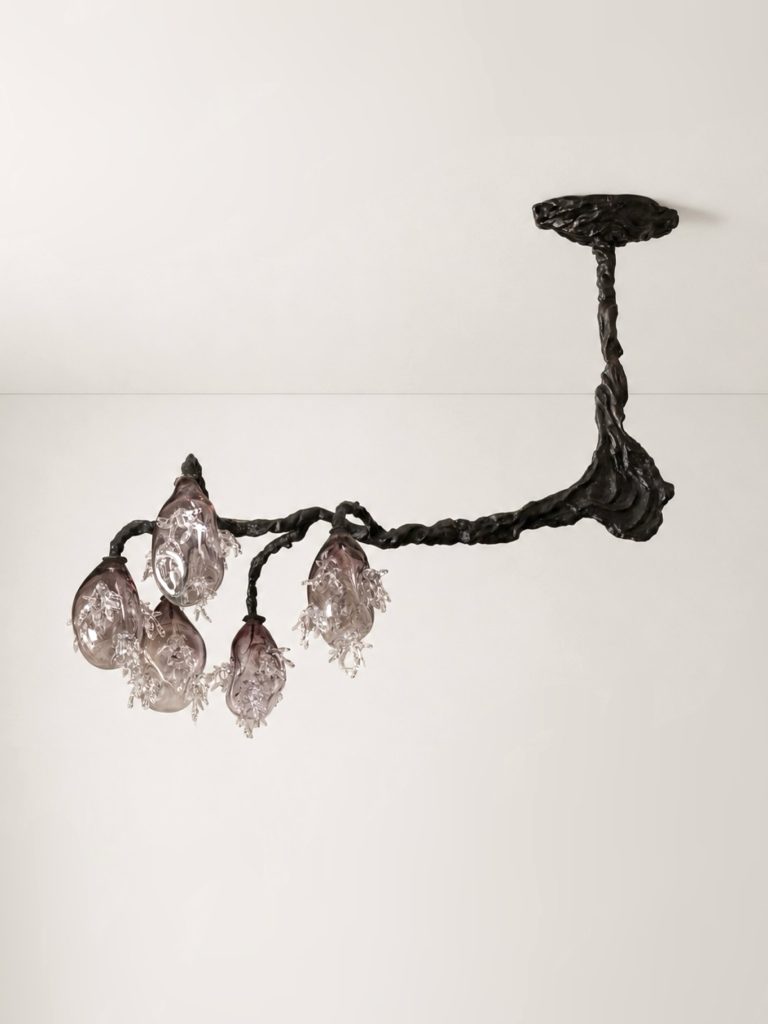
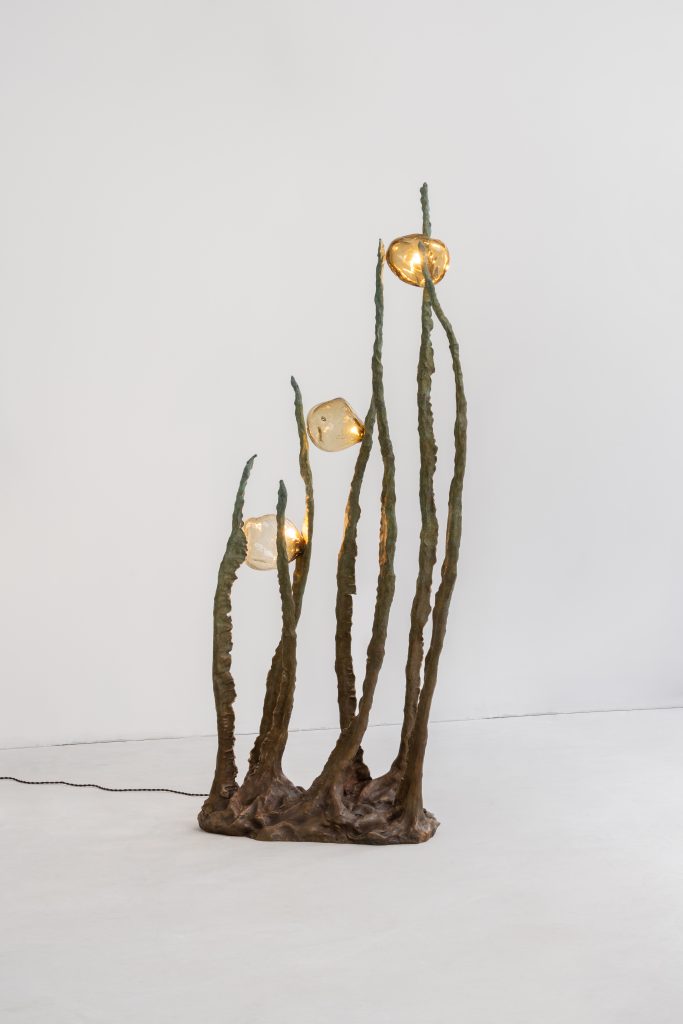
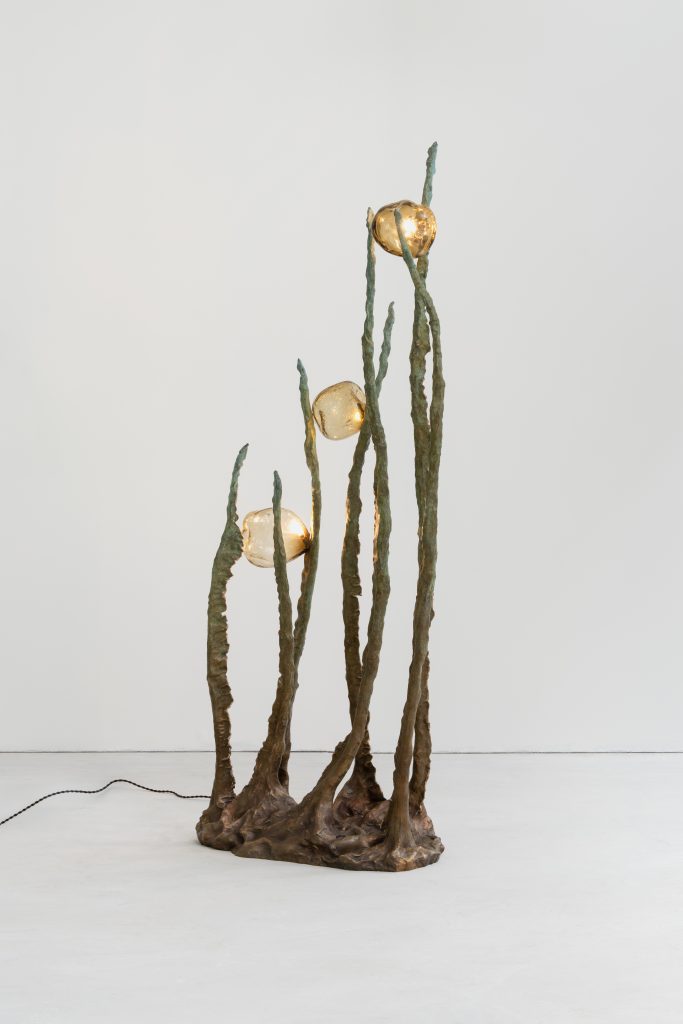
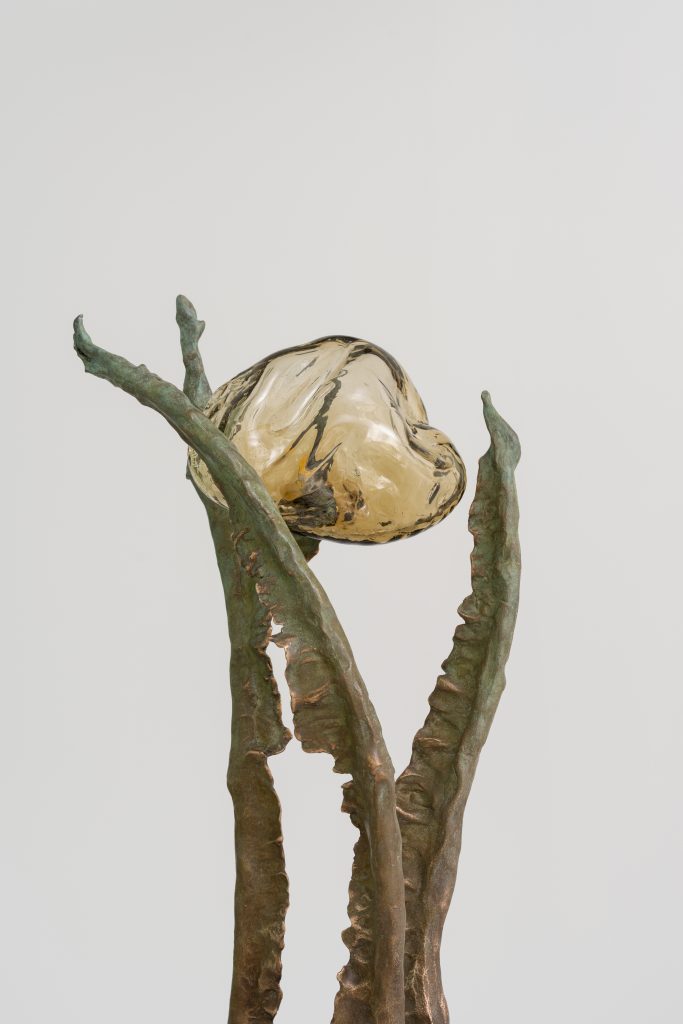
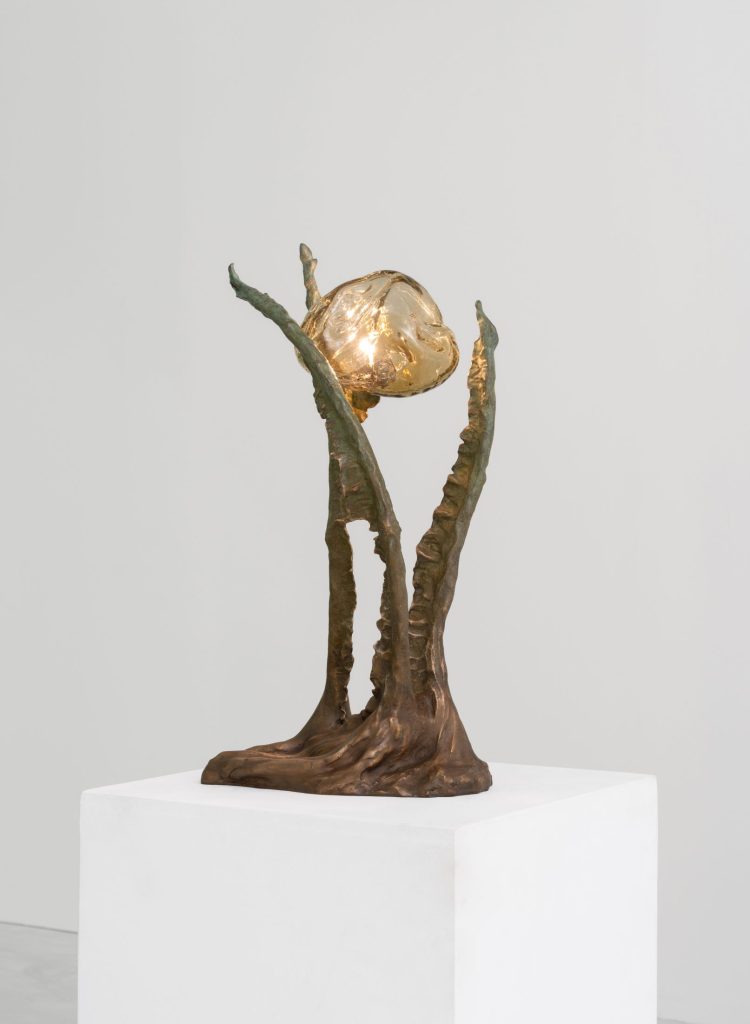
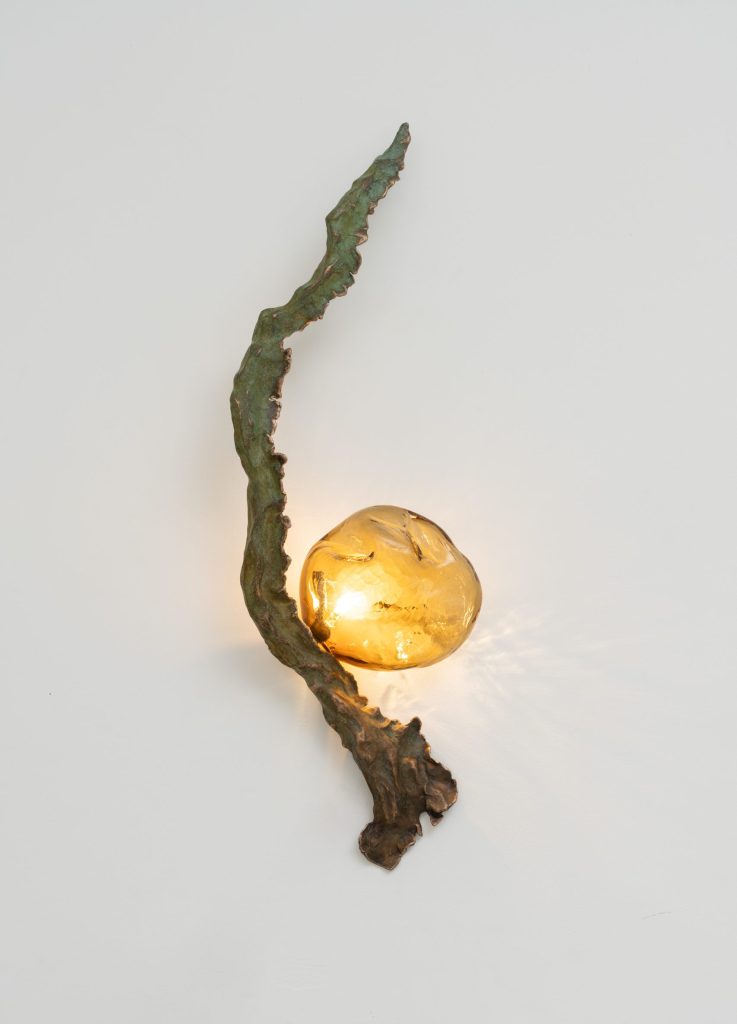
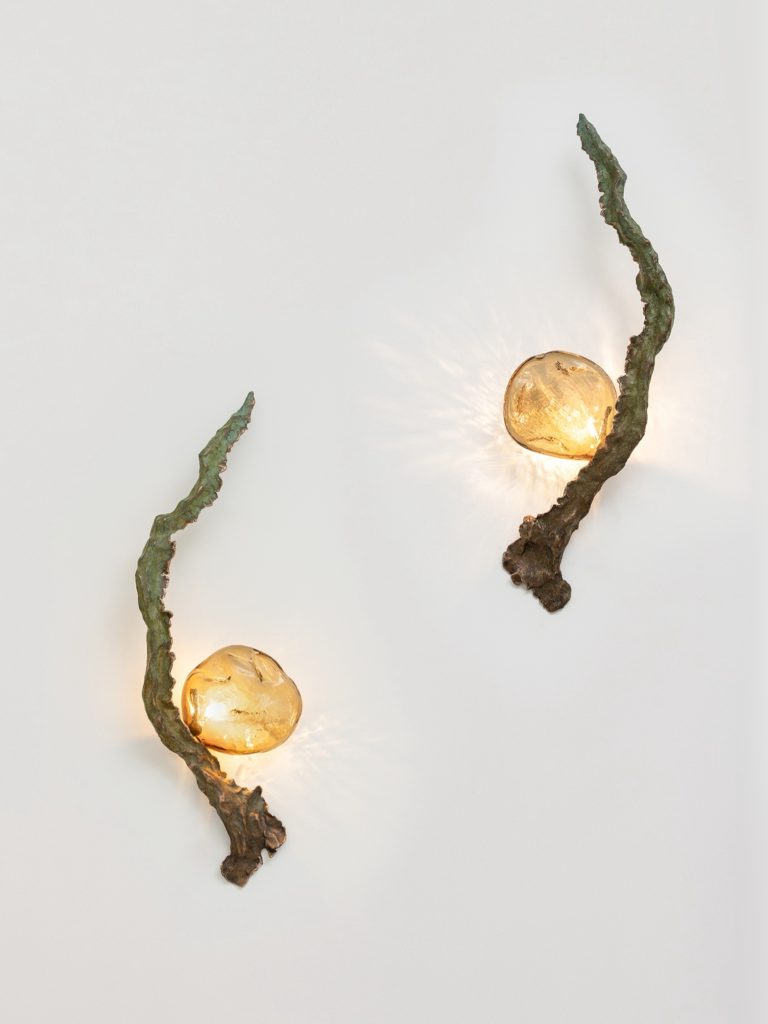
Emilie Lemardeley’s work unfolds at the intersection of sculpture, design, and the living world. Rooted in a deeply organic visual language, her pieces evoke forms that appear to emerge naturally — branching, blooming, crystallizing — as though suspended between growth and transformation. Drawing equally from mythology, Etruscan jewellery, and natural morphologies, she creates poetic works that oscillate between the mineral, vegetal, and aquatic realms, imbued with an almost ritualistic presence. Her practice is distinguished by an intuitive dialogue between material and gesture. Twisted bronze structures recall ancient relics or branches shaped by time and weather, while hand-worked glass elements seem to crystallize in motion, capturing fragility within solid form. Rather than reproducing nature, Lemardeley interprets its rhythms, symbols, and archetypes, constructing dreamlike compositions where functionality becomes secondary to atmosphere and emotion.
.
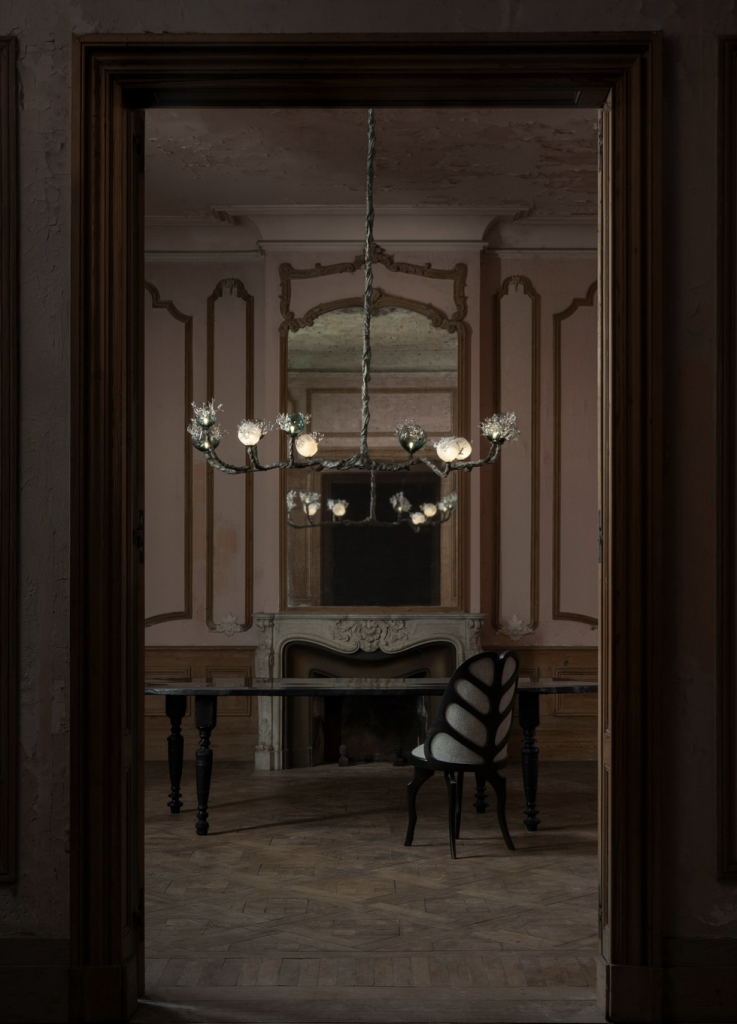
The mirrors, lighting pieces, and sculptural objects presented here possess a rare duality: they are at once delicate and visceral, refined yet untamed. Their translucent surfaces and fluid contours interact subtly with light, producing reflections, shadows, and chromatic variations that continuously transform the viewer’s perception. Each work becomes a living presence within space — not merely an object, but an environment of quiet intensity.
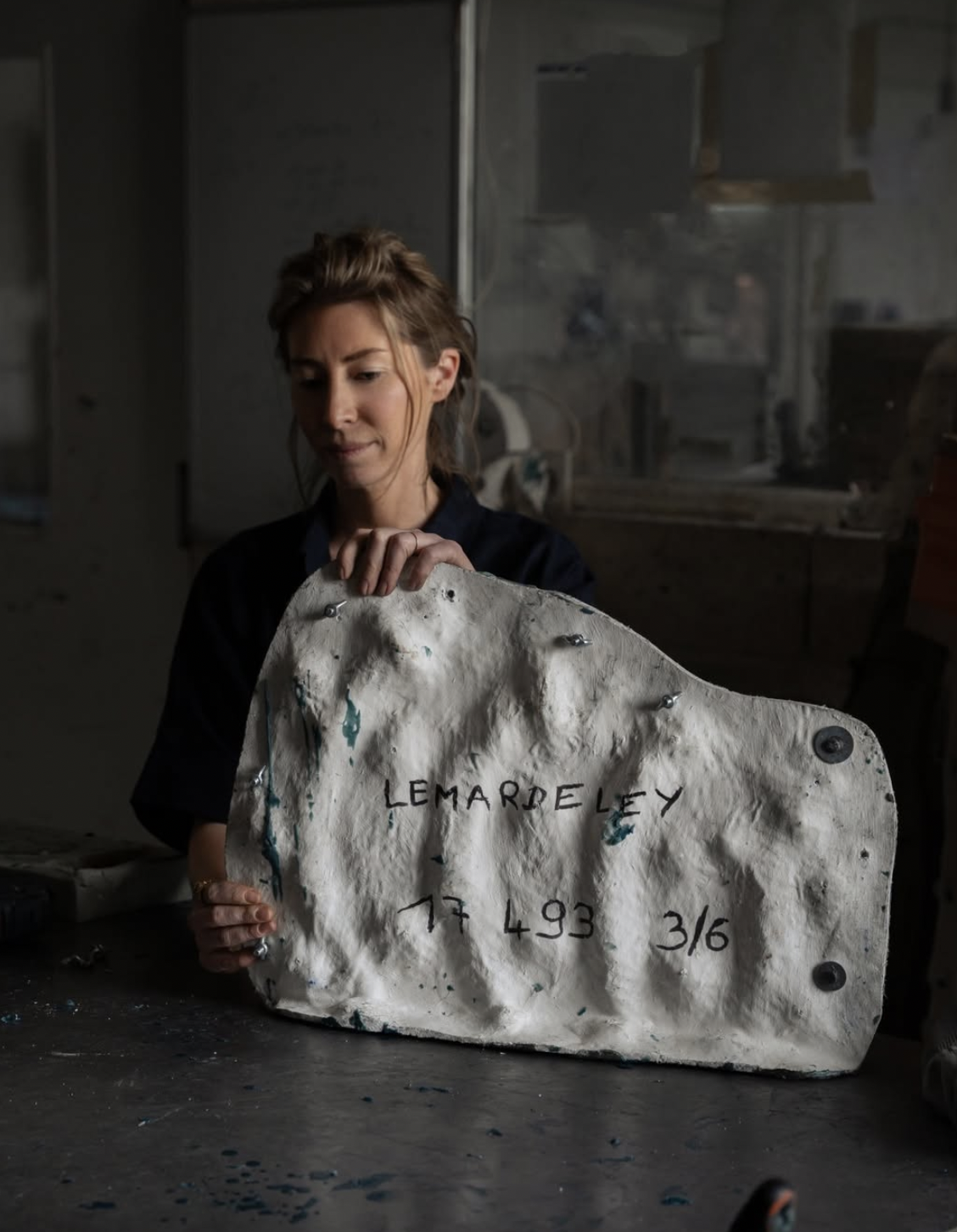
For each creation, Emilie Lemardeley works hand in hand with bronze-smiths and master glassblowers whose expertise brings her visions into material form. This dialogue between artist and craftsman ensures an extraordinary level of precision, authenticity, and quality throughout her work, anchoring each piece within the enduring tradition of French craftsmanship.
.
Balancing artisanal craftsmanship with a contemporary sculptural sensibility, Emilie Lemardeley develops a body of work that resists categorization. Her creations invite contemplation and intimacy, offering immersive forms that feel both ancient and otherworldly. In their organic asymmetry and tactile richness, they suggest a universe where nature and imagination merge into a singular, luminous language.