Taylan Aygün
Taylan Aygün (b. 1989) is a Turkish self-taught designer based between Paris and London. His practice and aesthetic research draw inspiration from the sinuous language of Art Nouveau and the vernacular craftsmanship of Anatolia.
Since he was a kid, Taylan Aygün has always loved drawing botanical motives as a hobby. After I shifted a career from law to design a couple years ago, he dedicated more time on these illustrations without really knowing what they were for. Through the global pandemic in 2020, he really became obsessed with this idea that no matter how big, and potentially destructive, humanity’s impact on it’s environment may be, our planet and it’s flora will survive humans, resist and adapt to any potential technological and mutative impact.
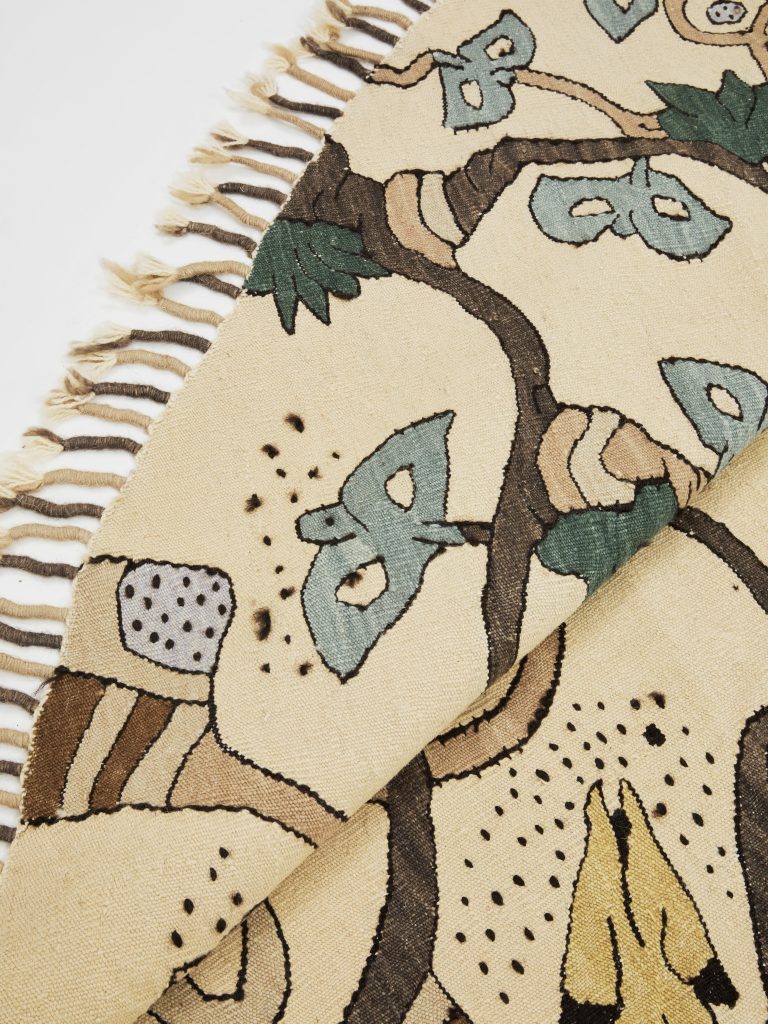
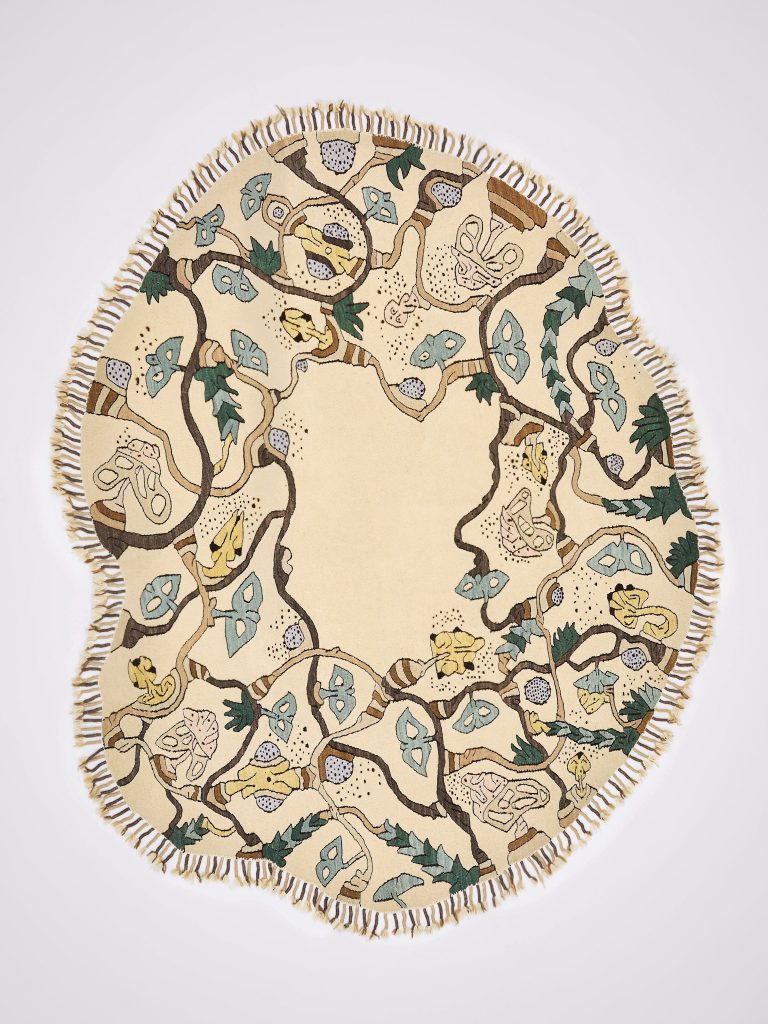
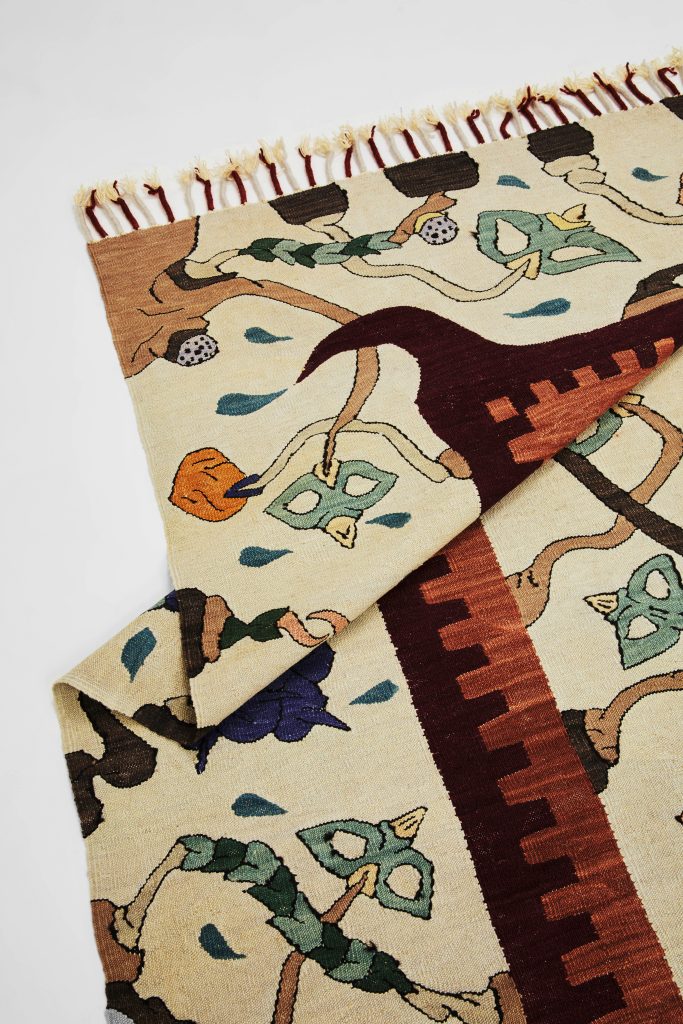
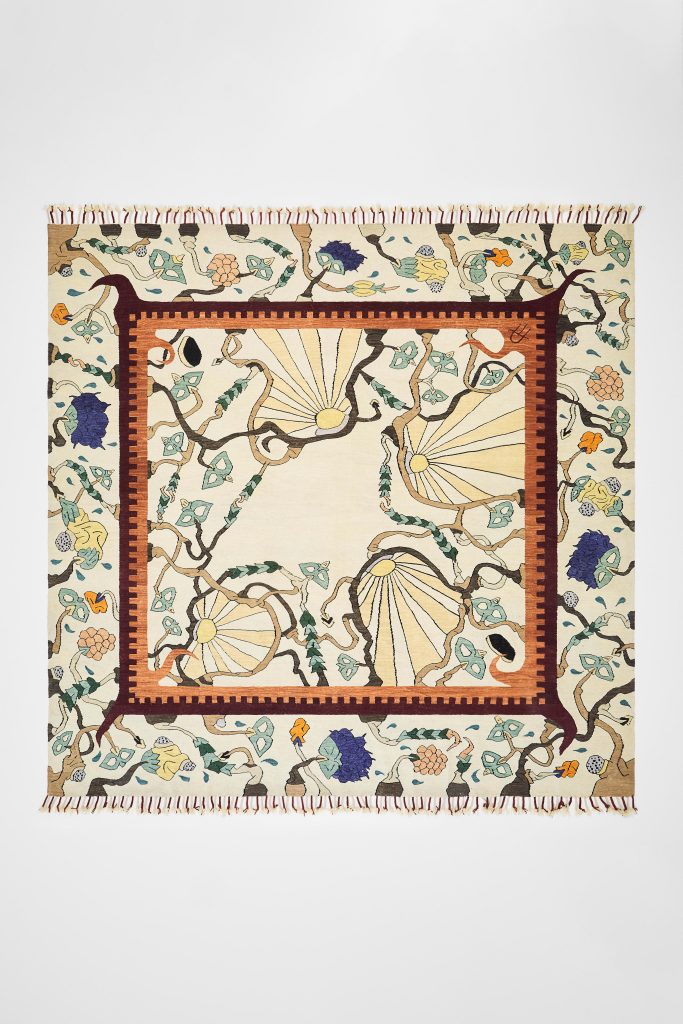
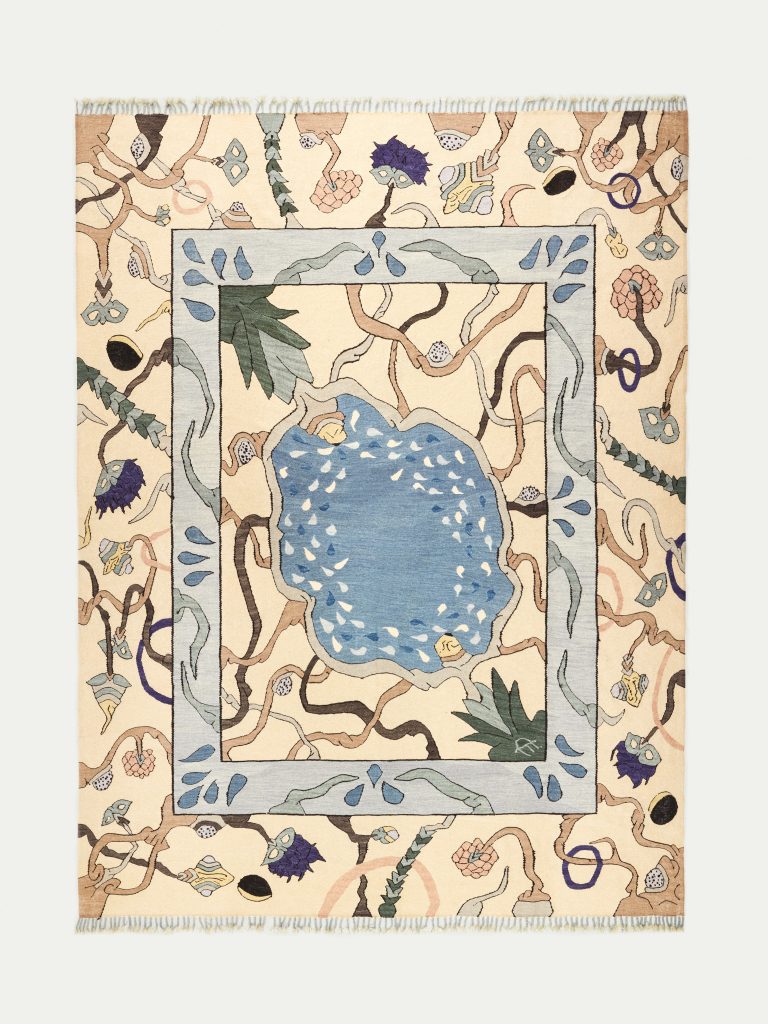
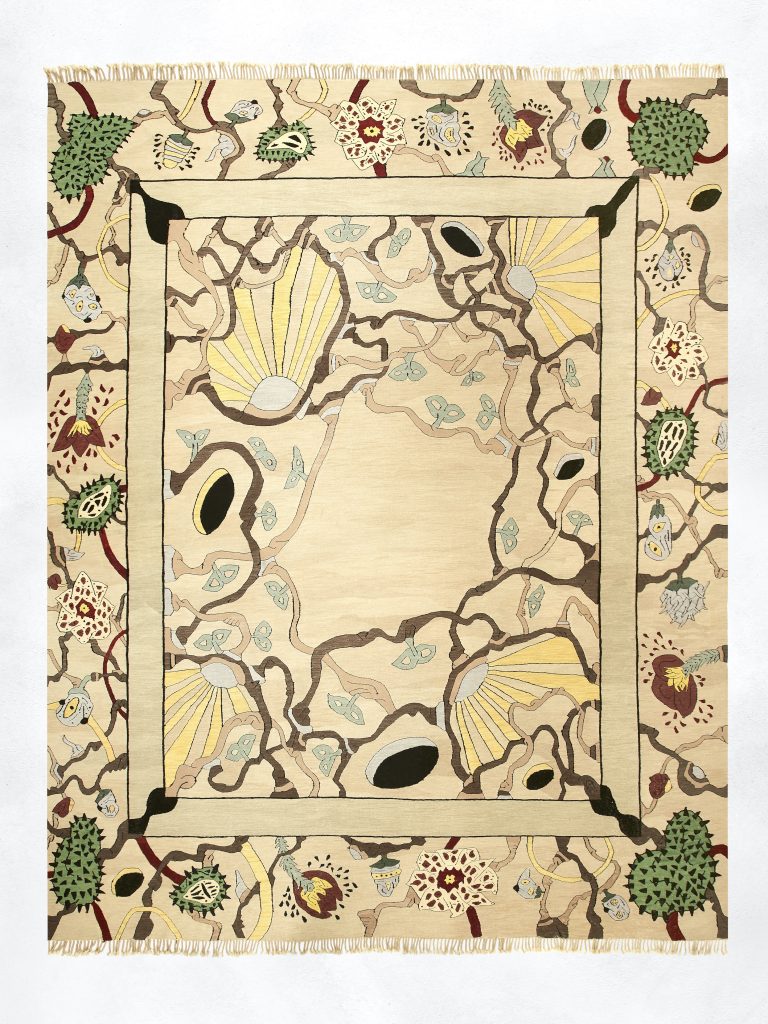
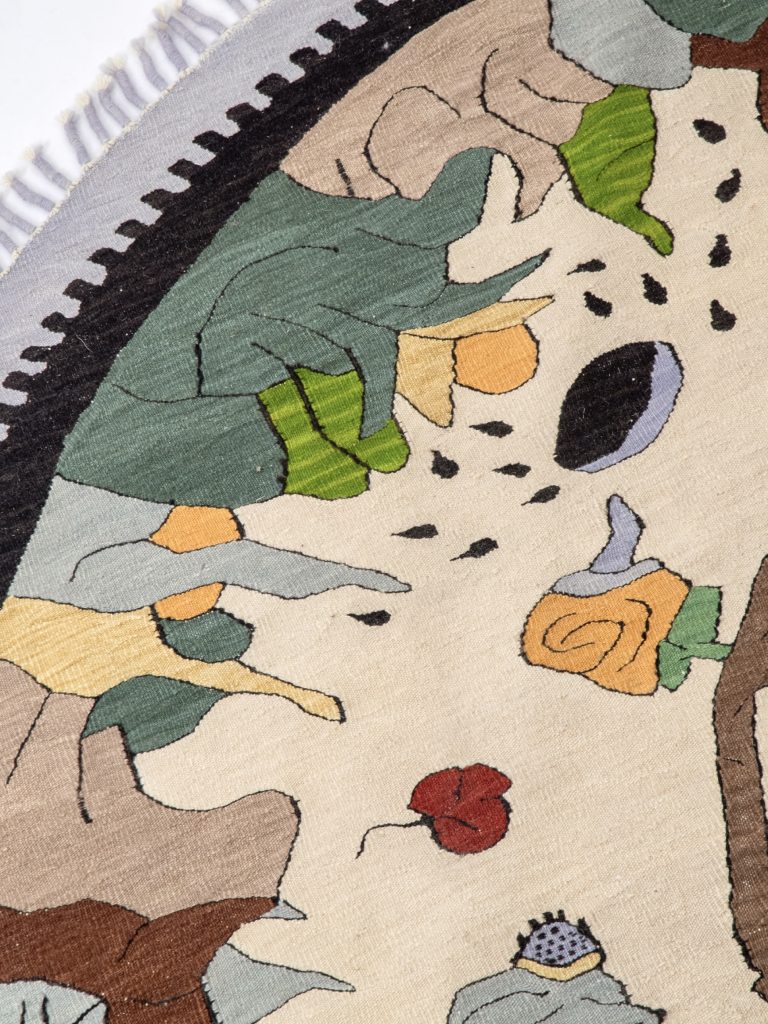
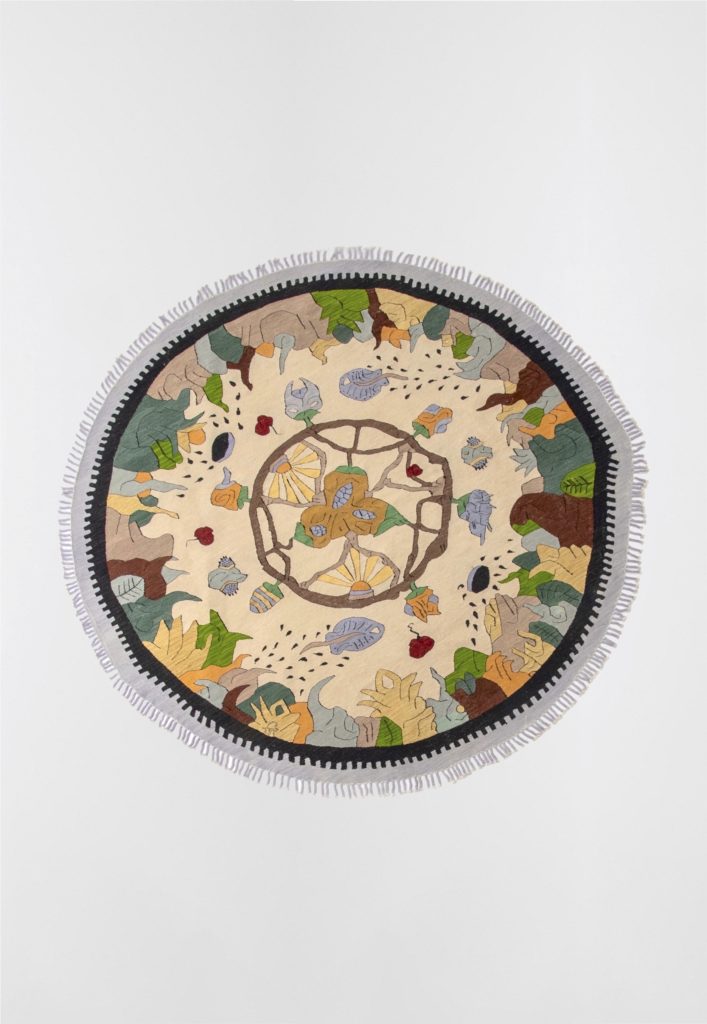
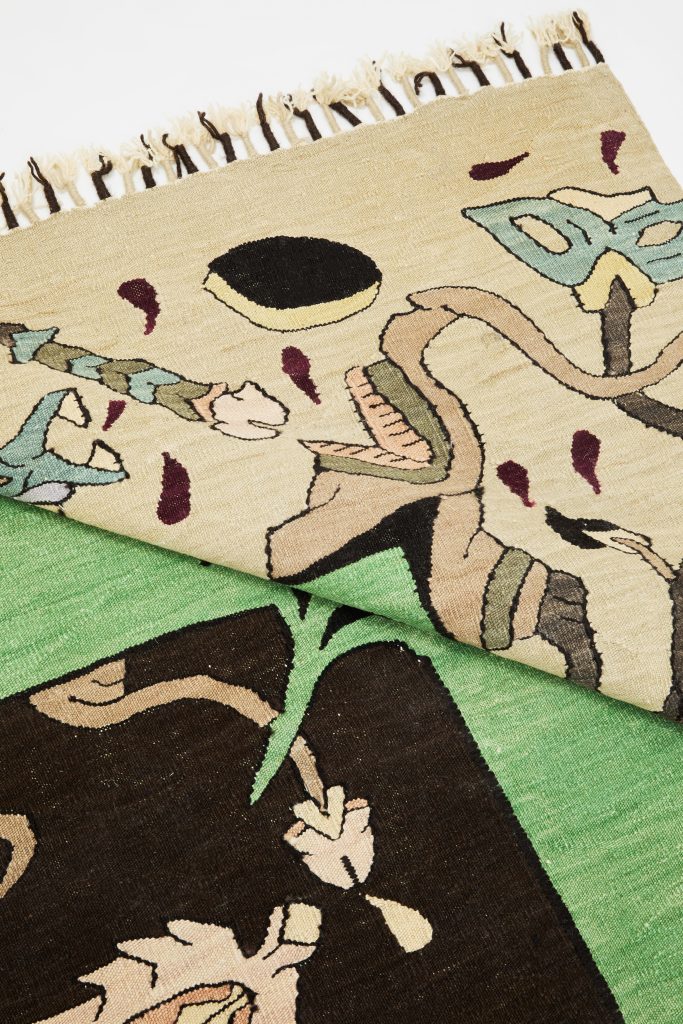
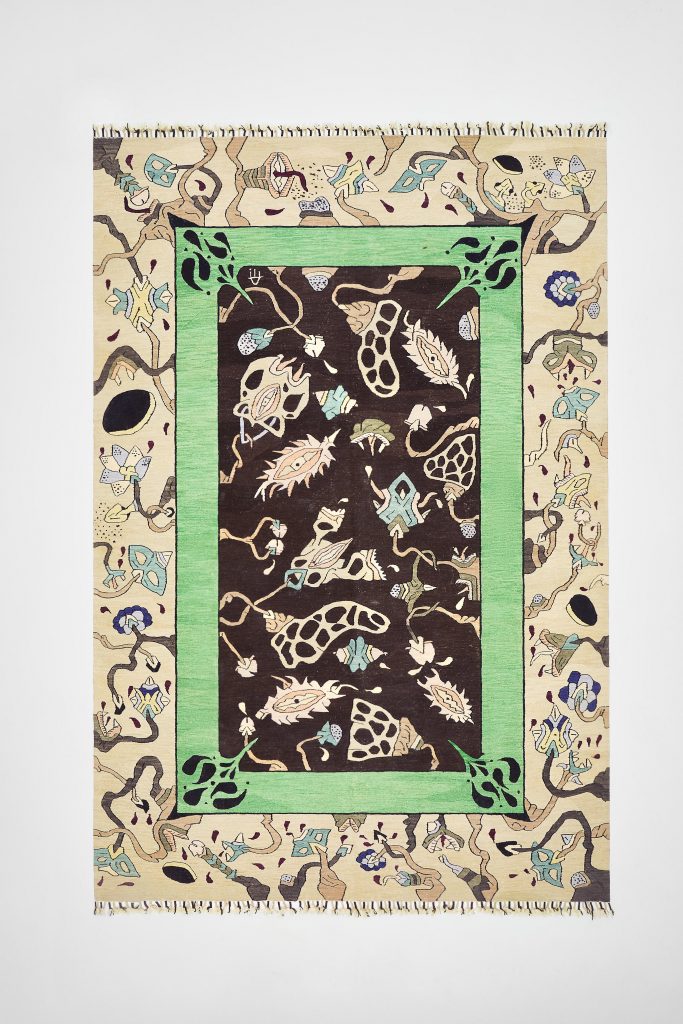
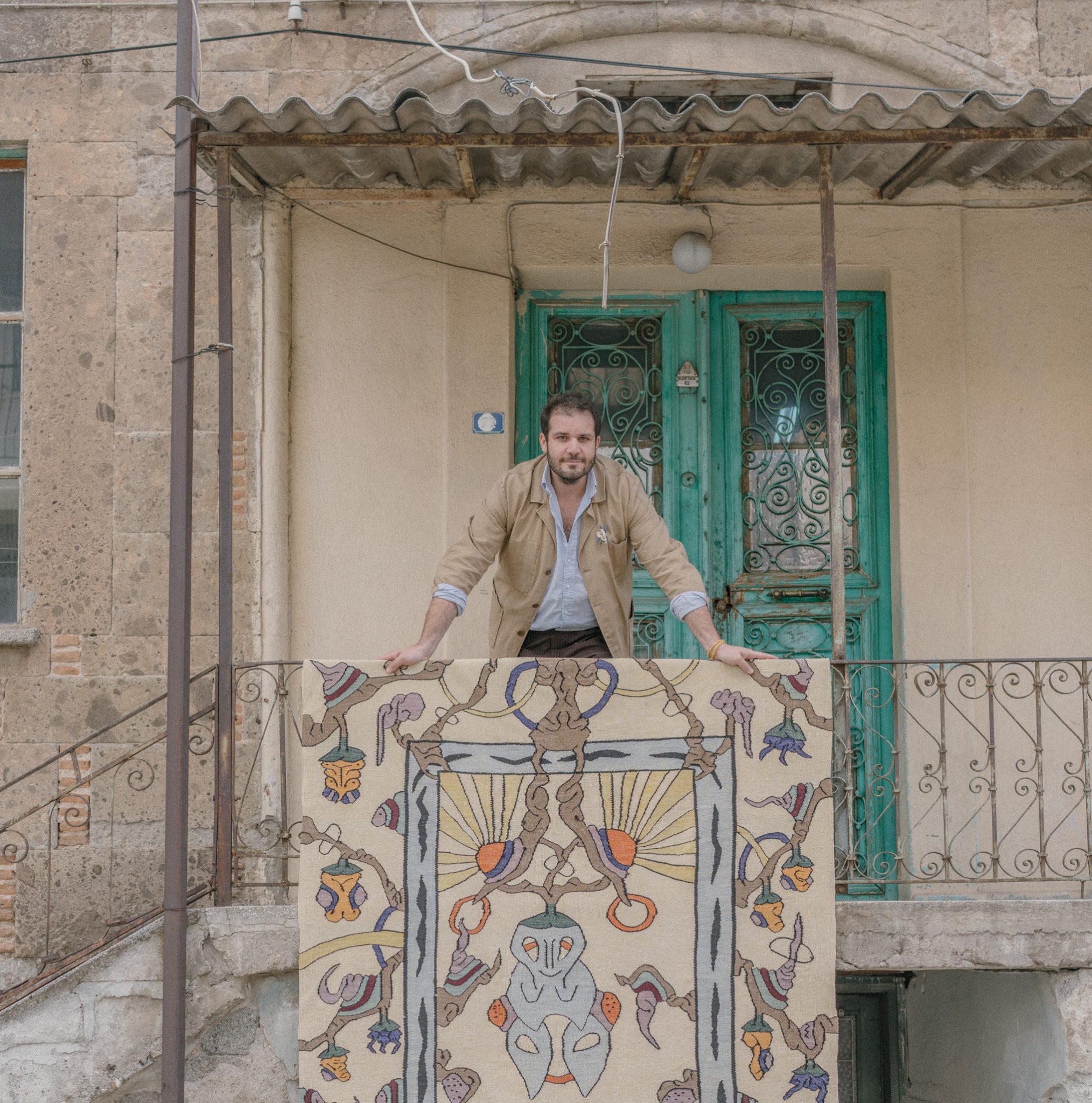
Imagining a future where anthropogenic evolution has transformed the natural world, Aygün conceives a series of dreamlike botanicals that flourish within an altered reality. Elastic stems and hybrid blossoms inhabit suspended, physics-defying landscapes, proposing an alternative ecology in which imagined plants endure as symbols of resilience and survival. These motifs can be read as speculative survivors, hypothetical plants that persist beyond catastrophe, and as woven testimonies of resilience.
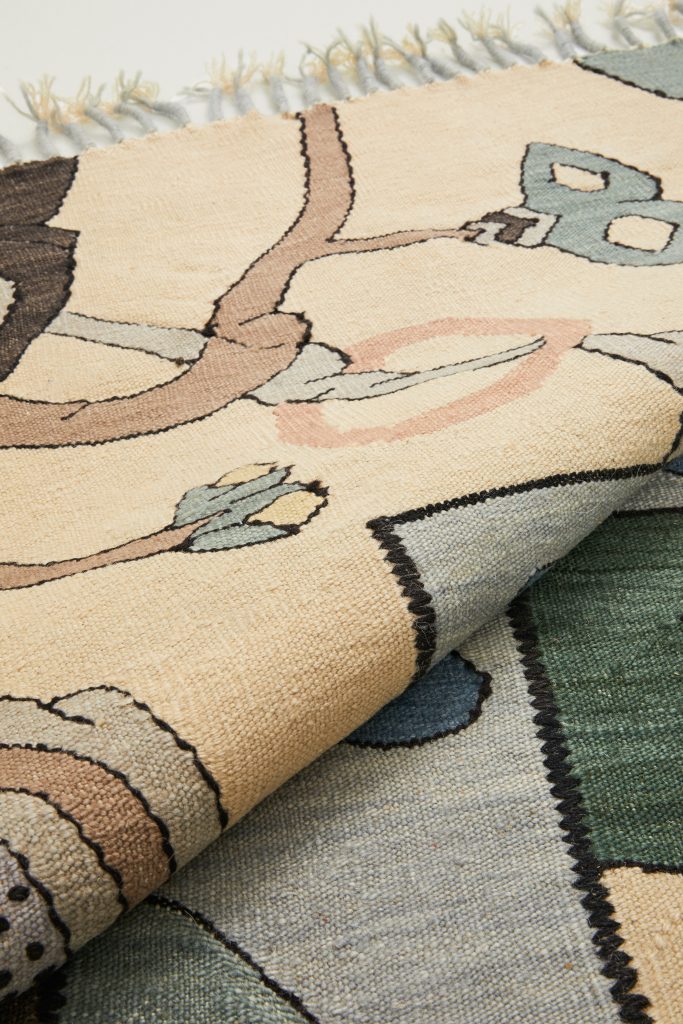
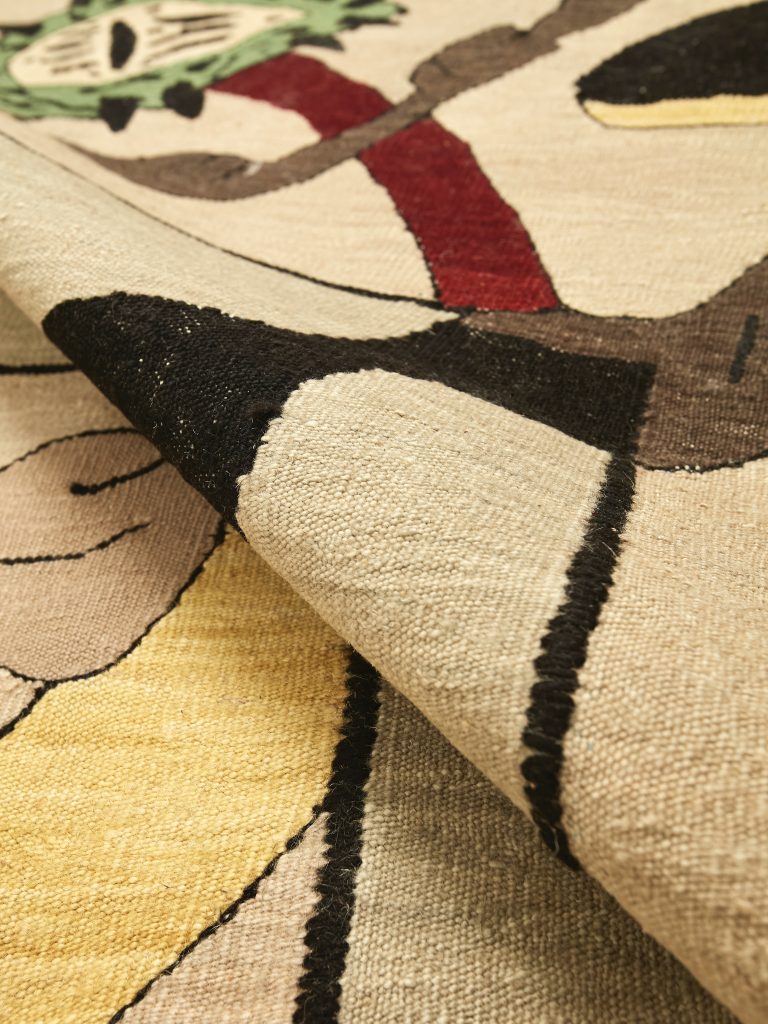
The symbolic language of Kilim weaving, long used to record experiences within nomadic life, allows his works to act as crafted records of survival and perseverance. To materialise this imaginary garden, Taylan collaborates with a collective of craftswomen across Anatolian villages in Türkiye. The wool is locally sourced and dyed with pigments extracted from botanics, and each composition is translated into coded structures through flat weaving, embedding fictional flora and fauna within a domestic and ritualistic object. Through this process, the Kilim becomes a contemporary tapestry that binds unearthly visions into an inherited craft. Within their strangeness lies a quiet optimism: the suggestion that life always finds a way.
Produced by Easthaus
Music by Berk İçli
With the support of Galerie Mélissa Paul