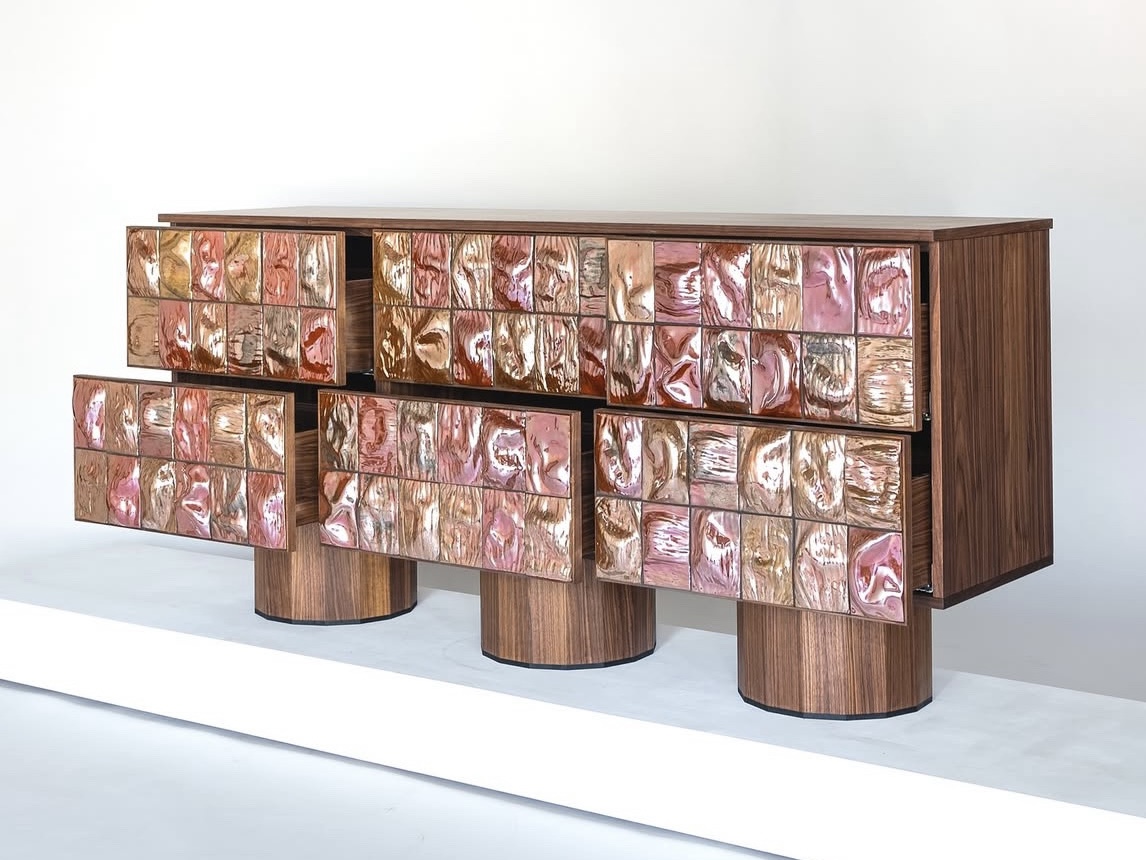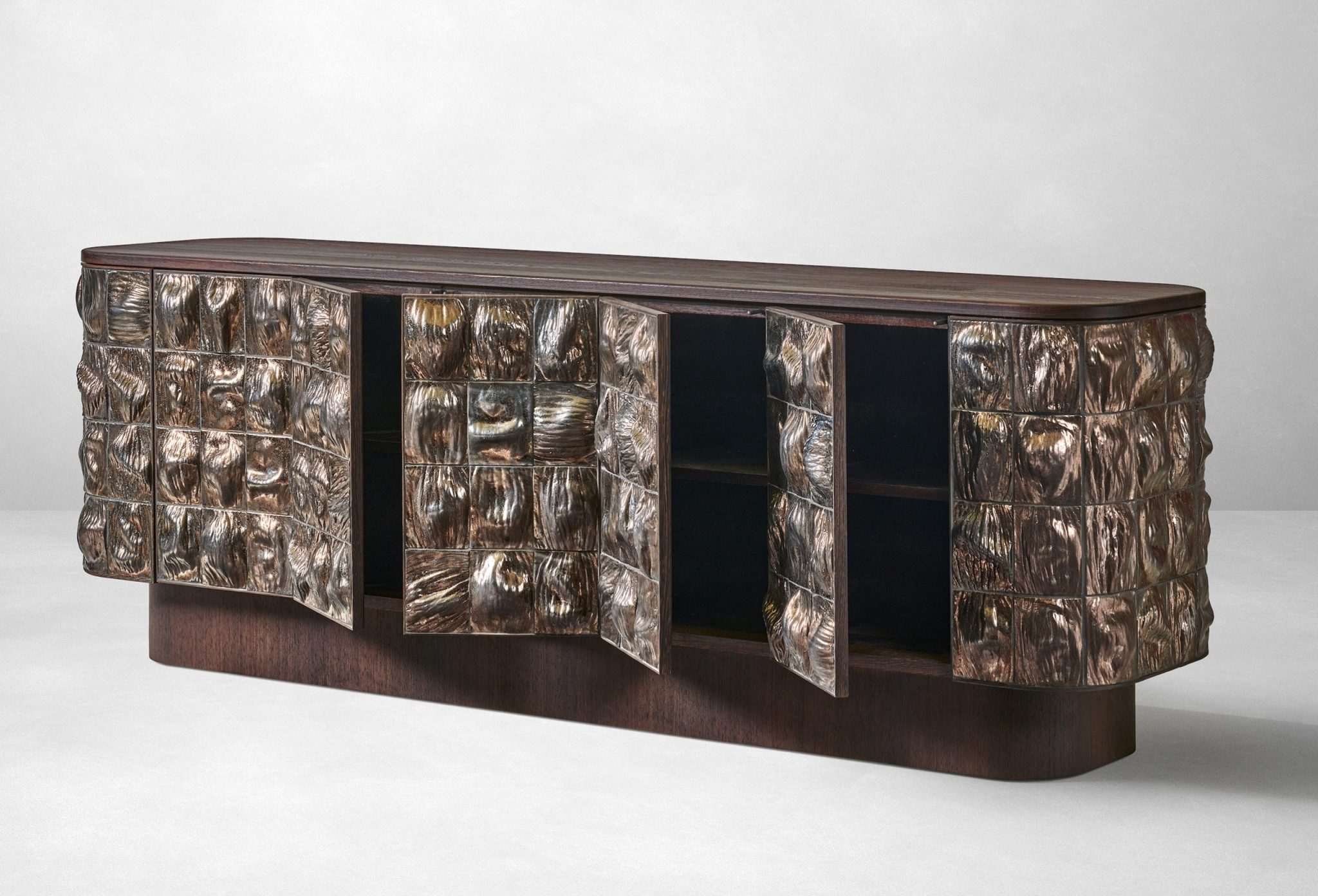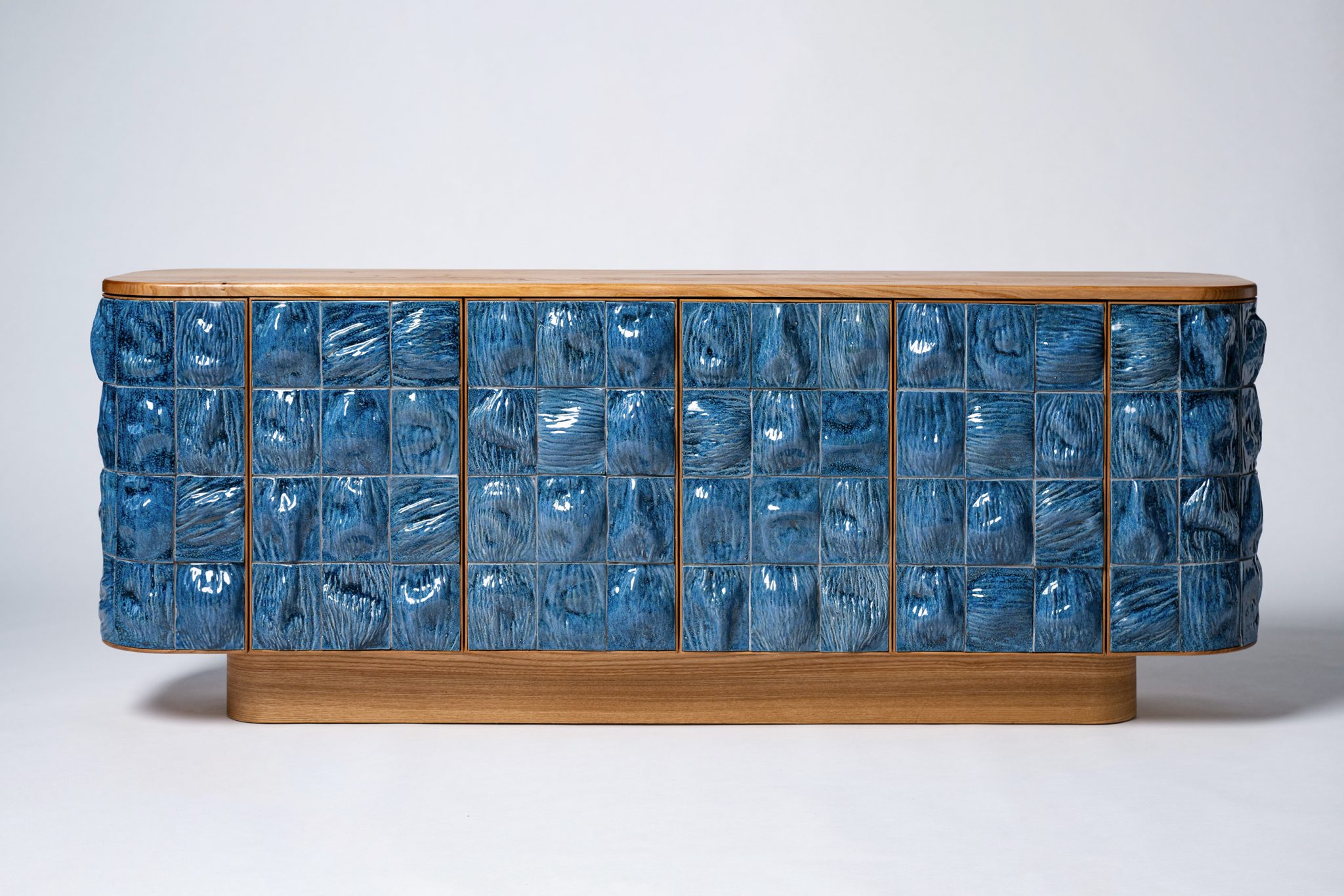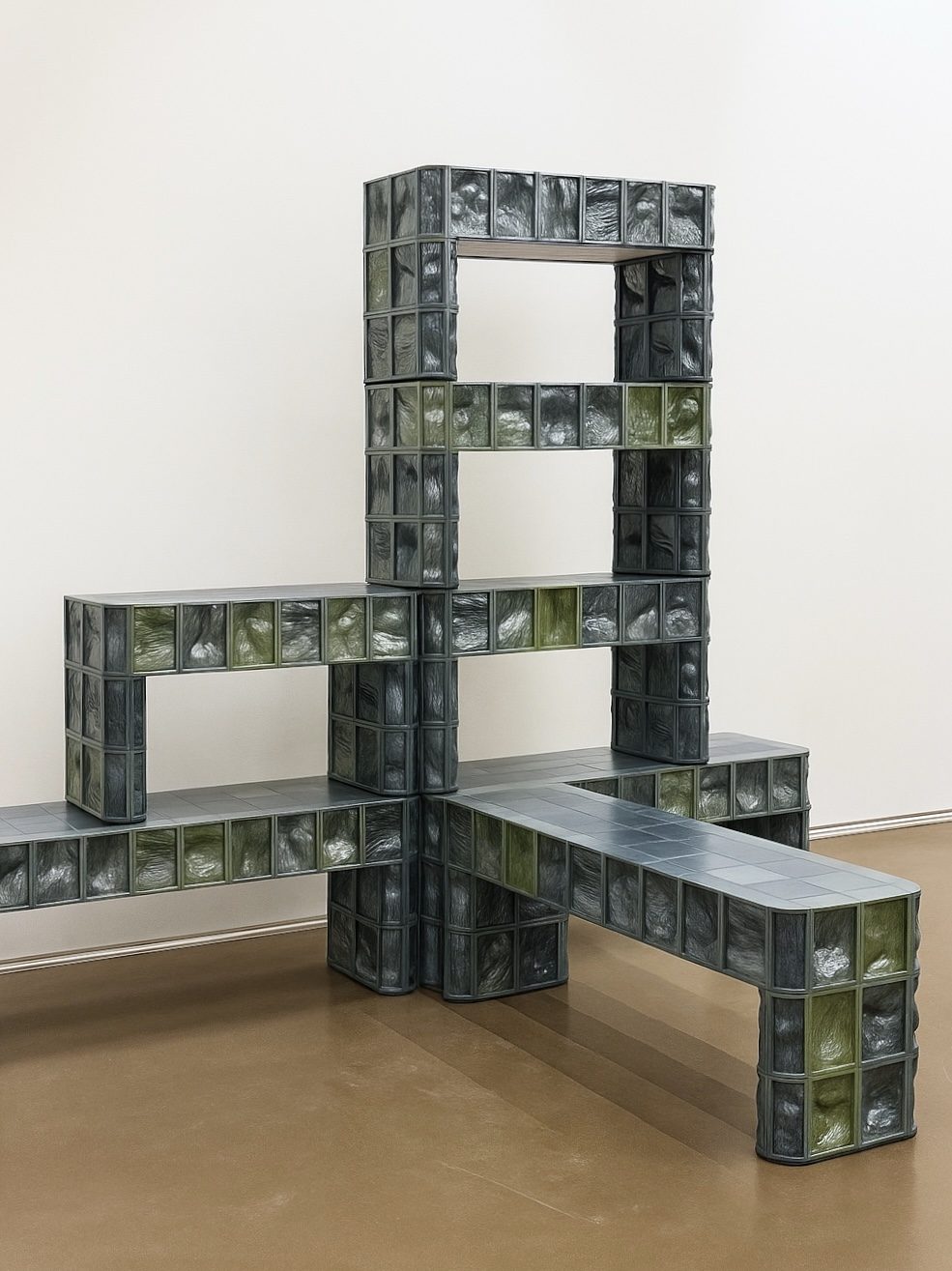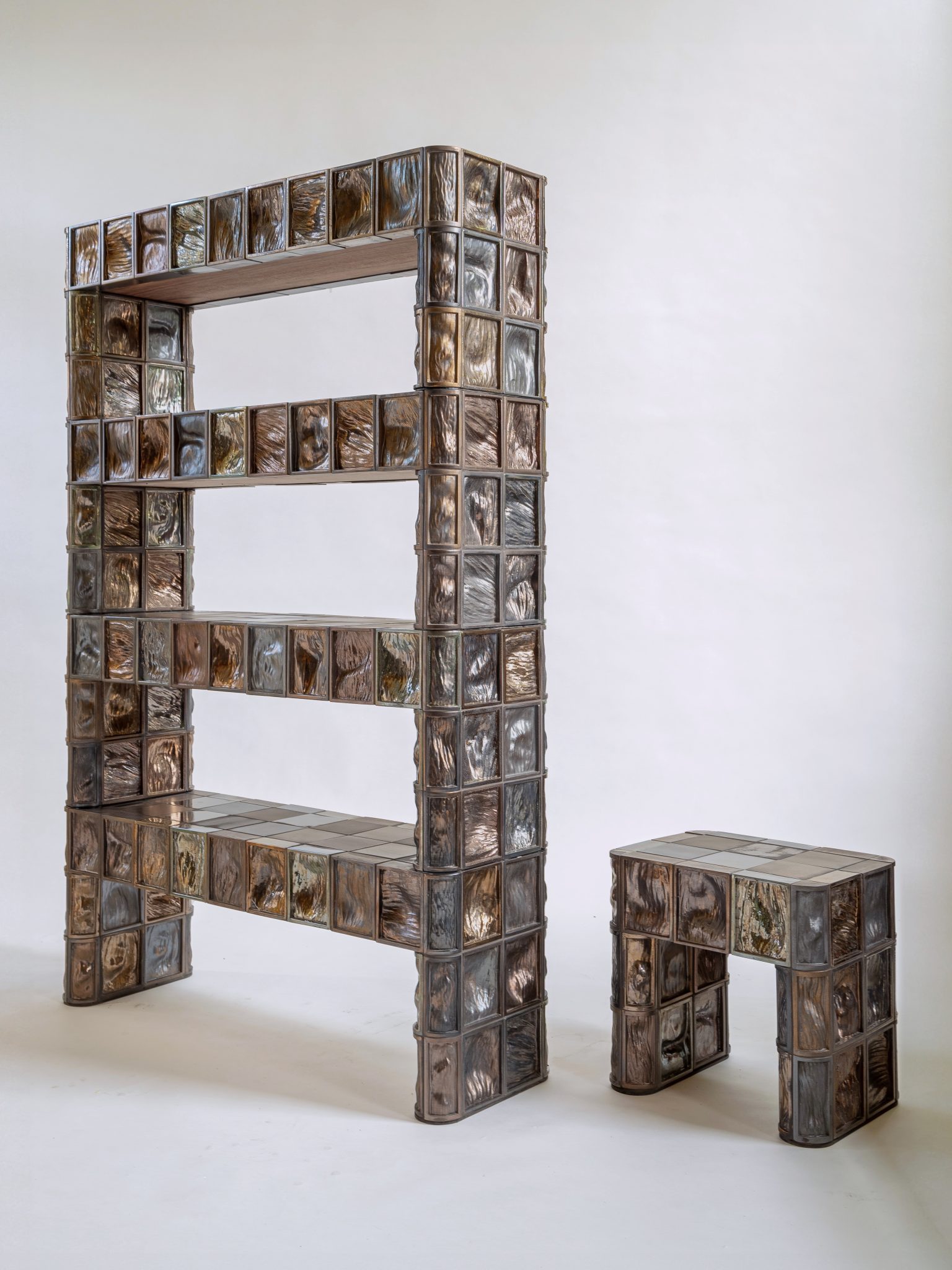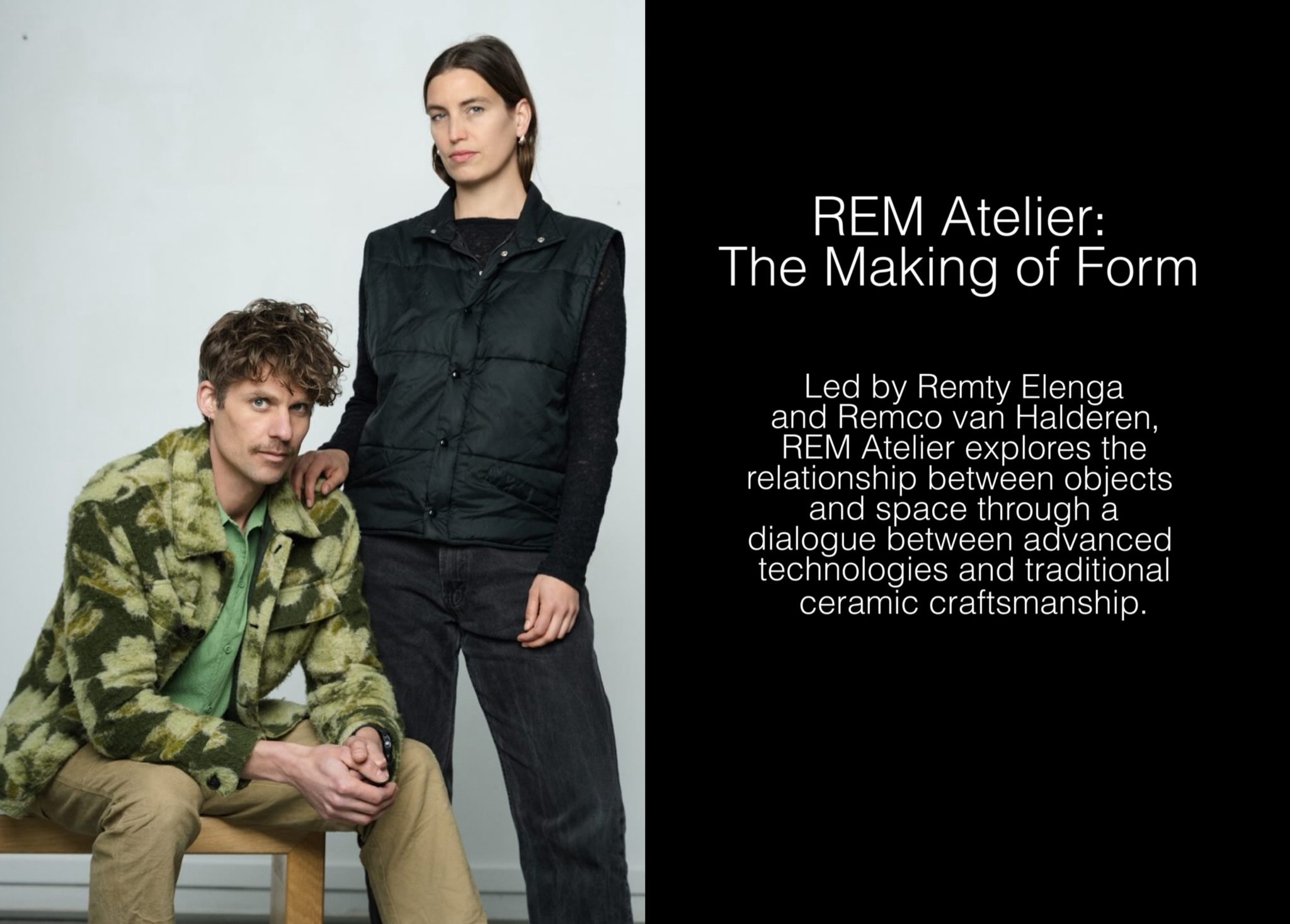
The Netherlands-based duo behind REM Atelier explores the intersection of art, craft, and functionality. Through carefully selected materials and a distinctive formal language, they create sculptural works inspired by nature, processes of organic growth, and a sense of playfulness within space.
Drawn to the creative freedom of contemporary collectible design, the designers embrace experimentation and material exploration at the core of their practice. Their work blurs the boundaries between furniture and sculpture, resulting in pieces that are both functional and evocative, capable of transforming a spacial atmosphere.
A shared background in fine art and traditional furniture making led them to develop an early fascination with ceramics, creating furniture characterized by fluid lines and organic movements. Today, REM Atelier continues to combine handcrafted techniques with a sensitive approach to form and material, producing timeless works that balance everyday utility with artistic expression.
— By Helena White. For UNFOLD Issue #10, July 2026.
Your work sits at the intersection of sculpture, design, and architecture. How do you define your practice, and how do these disciplines inform one another within your creative process?
We don’t define our practice through a single discipline. Rather than thinking in terms of sculpture, design, or architecture, every project begins with observation, intuition, and material exploration. The design is never the starting point—it emerges through making, experimenting, and allowing the process to reveal its own direction.
If our work bridges these disciplines, it is simply because that is the natural outcome of how we work. A piece may begin with a sculptural gesture, a spatial idea, or a functional question, but as it develops, these elements naturally converge. That is why we find it difficult to define our practice within a single discipline—or even in a single word.
« Our work rarely begins with
a fully formed concept. More often, it starts with a material,
a detail, or a moment of curiosity. »
— REM Atelier.
« What appears effortless is
often the result of a long process of
testing, failure, and discovery.»
— REM Atelier.
Materiality plays a central role in your projects. What attracts you to the materials you choose, and how do their physical properties shape the final form and narrative of a piece?
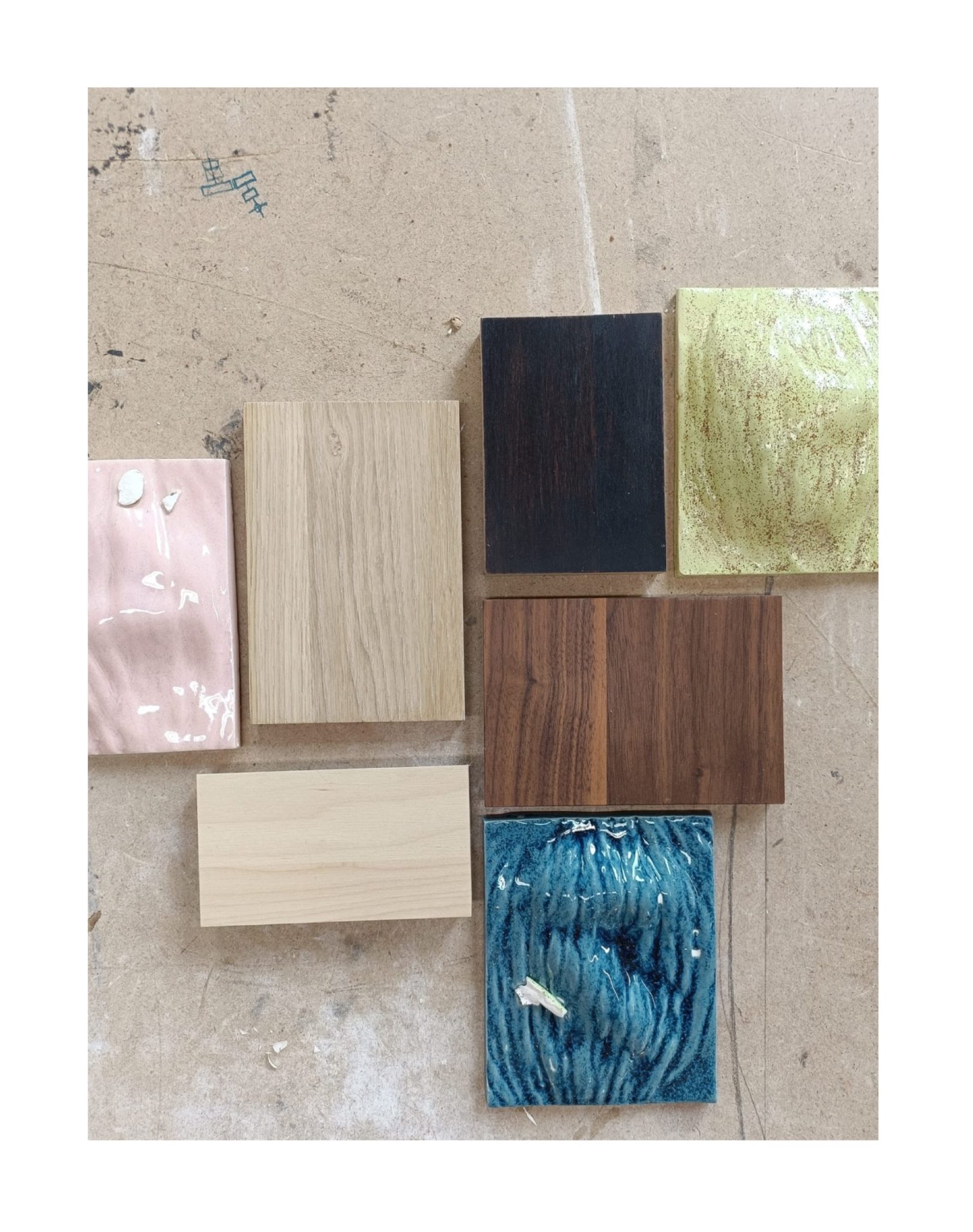
We choose materials not because we already know what they should become, but because they reveal something through the making process. Every material has its own character, limitations, and possibilities, and it is this dialogue that shapes the work.
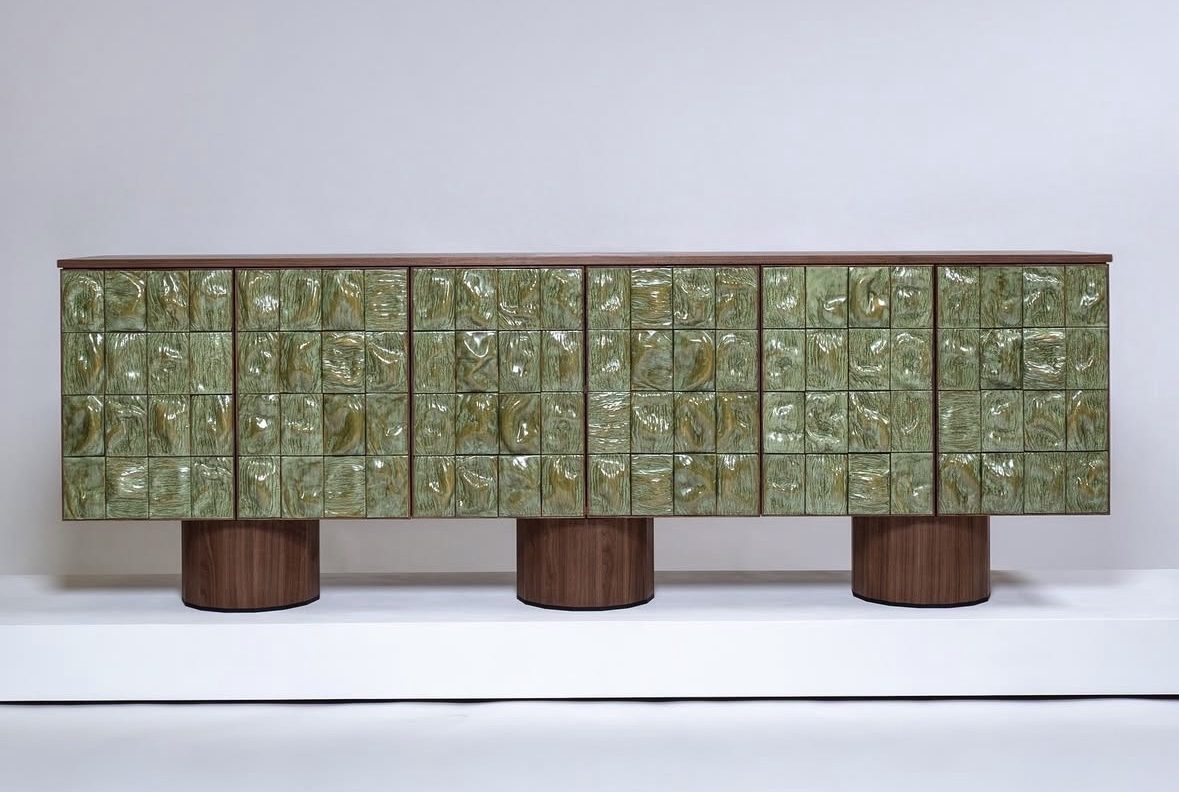
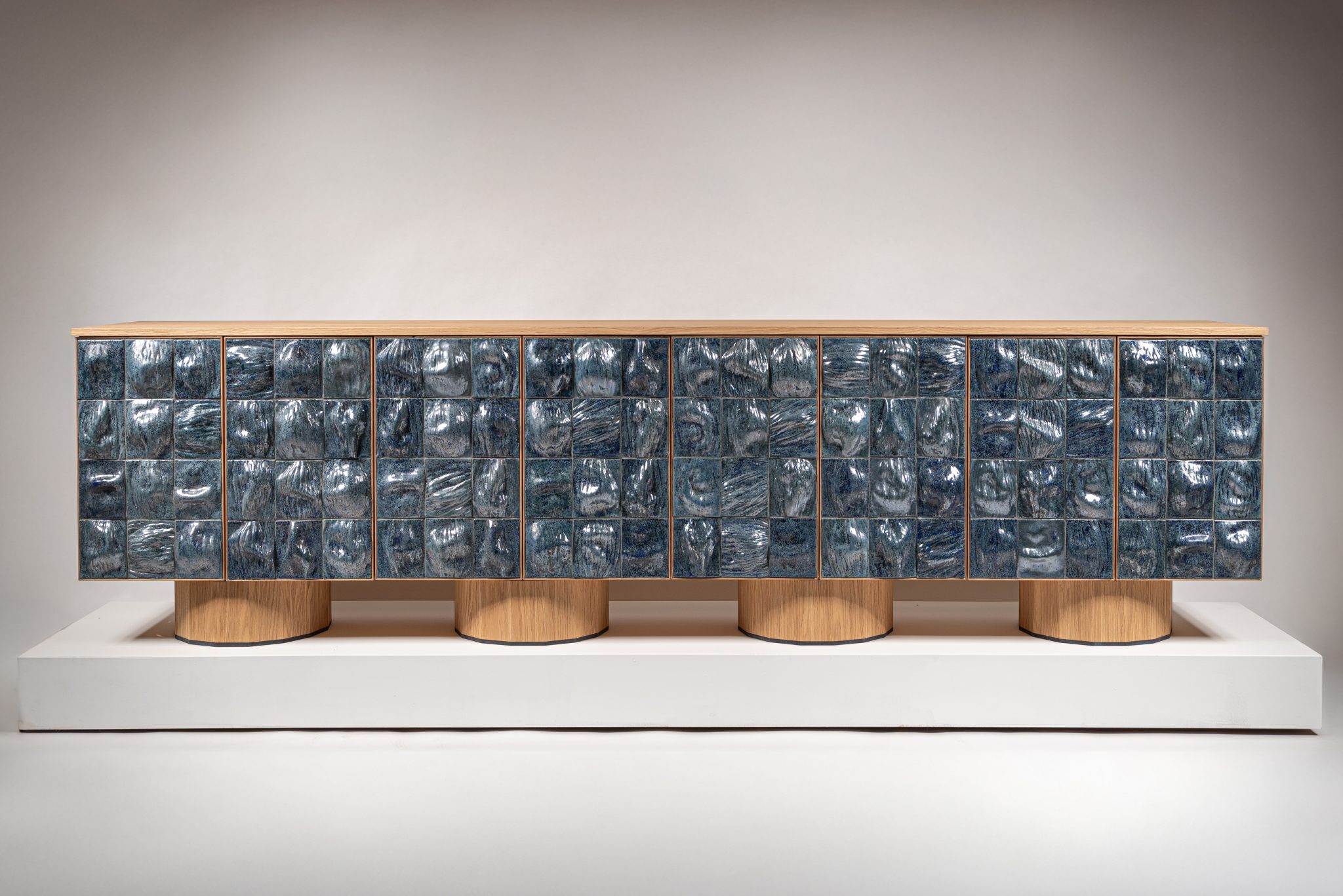
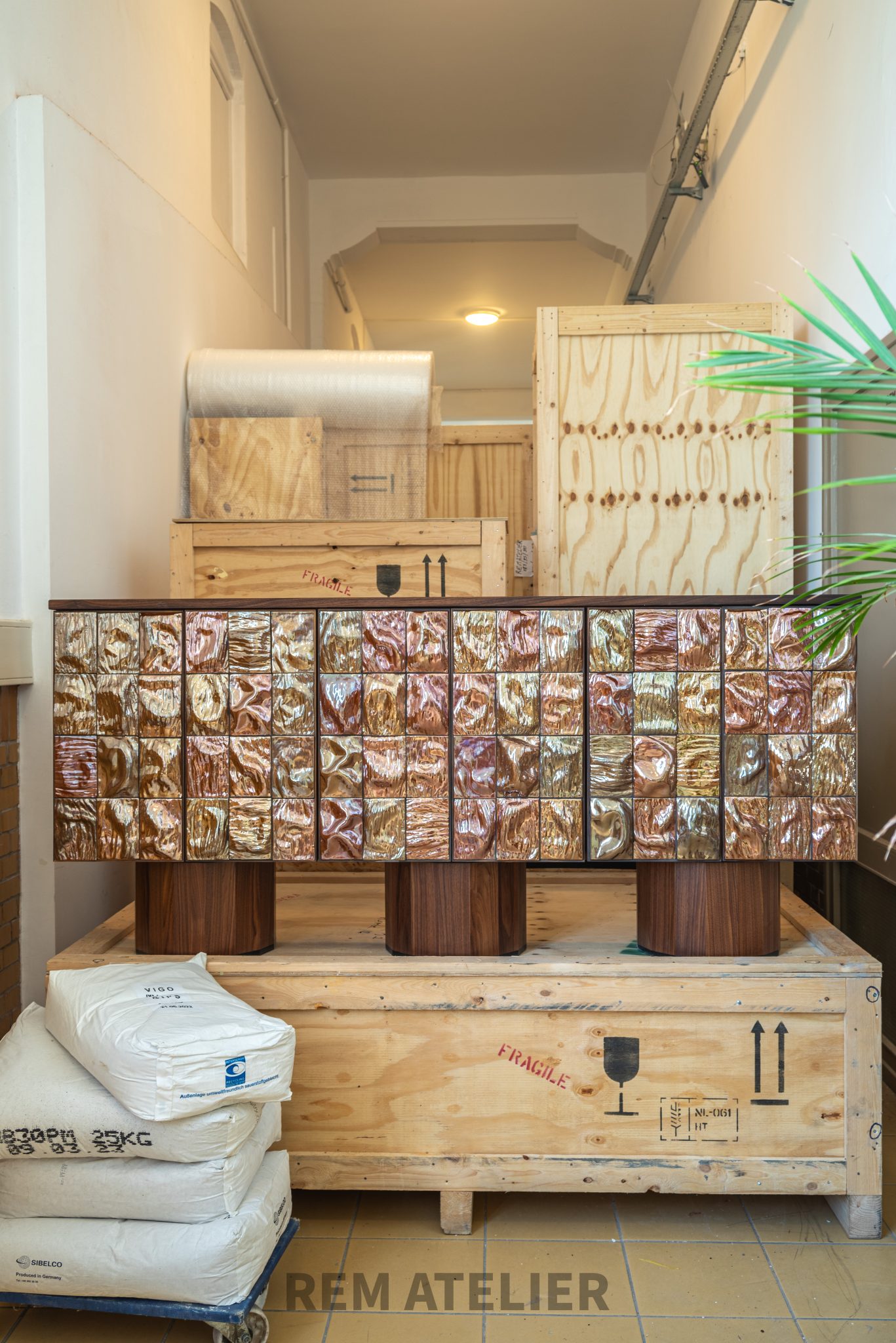
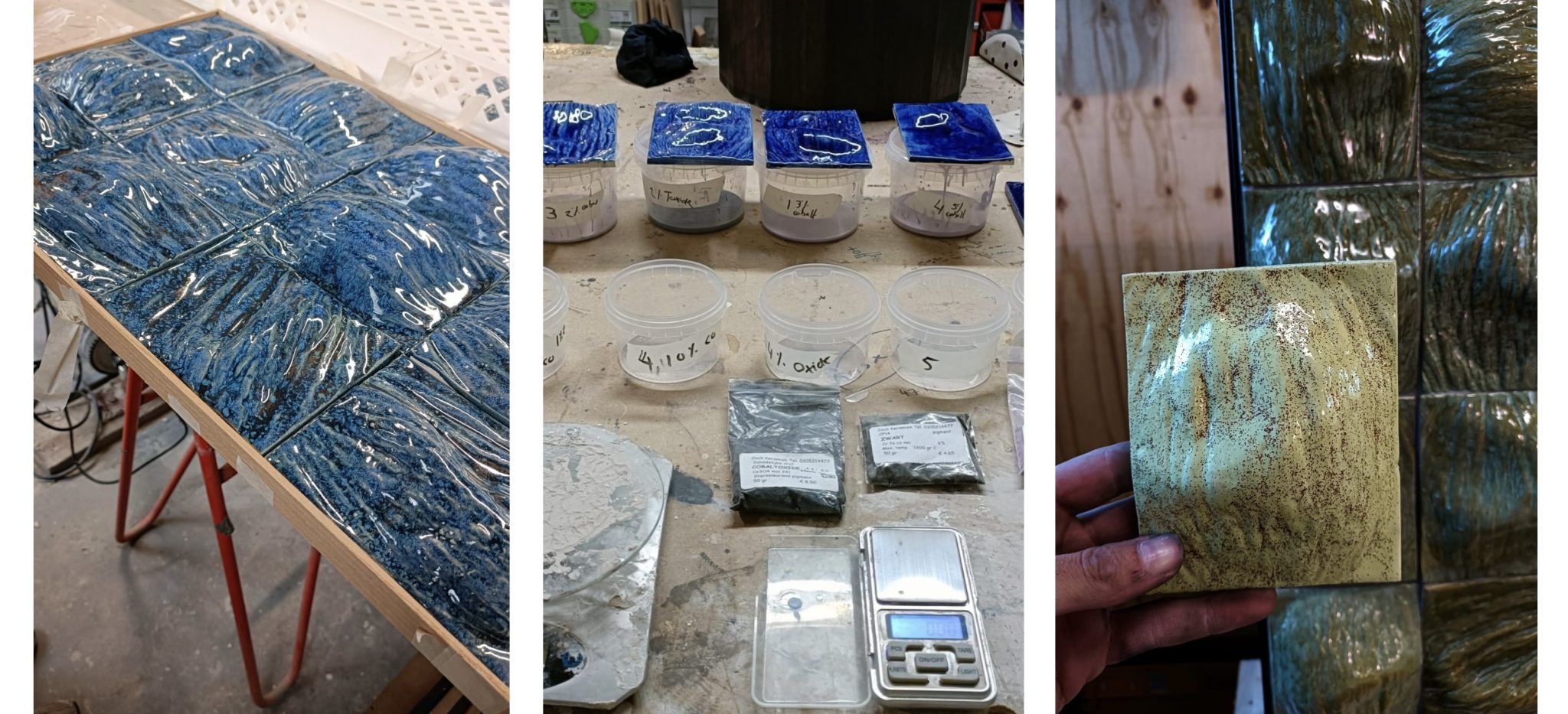
Ceramic has become central to our practice. Over the years, we have developed a deep understanding of it, yet it continues to surprise us. While it can be guided, it can never be fully controlled, and that unpredictability is what keeps it exciting. Especially through glaze, even the smallest variation in composition or firing can completely transform the final result.
That balance between intention and chance gives each piece its unique atmosphere and character. Rather than simply serving as a medium, the material becomes an active partner in the creative process.
There is often a strong sense of balance between experimentation and craftsmanship in your work. Can you describe how your ideas evolve from concept to finished object, and the role that collaboration with artisans or fabricators plays in that journey?
Our work rarely begins with a fully formed concept. More often, it starts with a material, a detail, or a moment of curiosity. As we make, new insights emerge, allowing the idea to evolve naturally. The design is never a fixed plan but the outcome of the process itself.
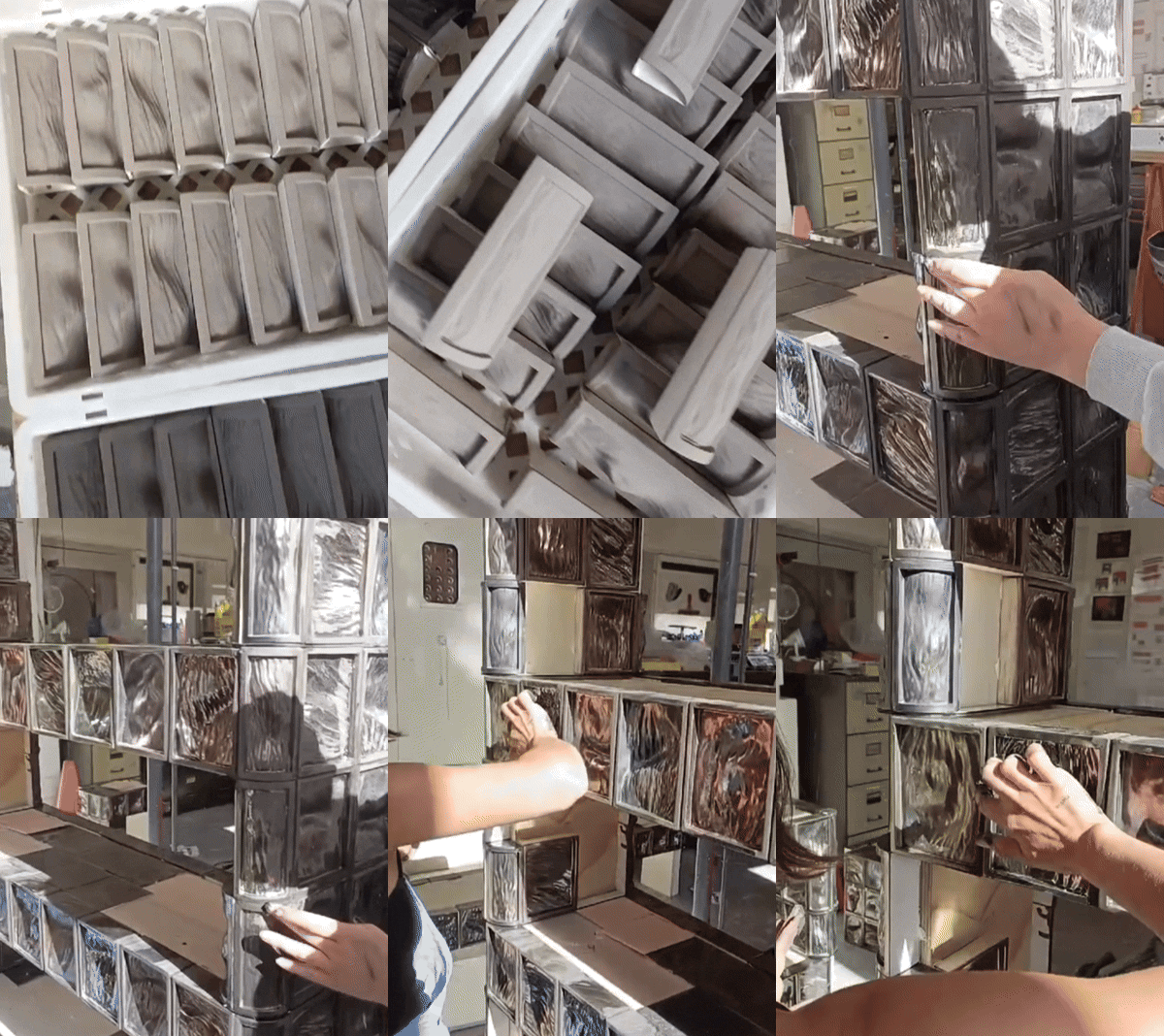
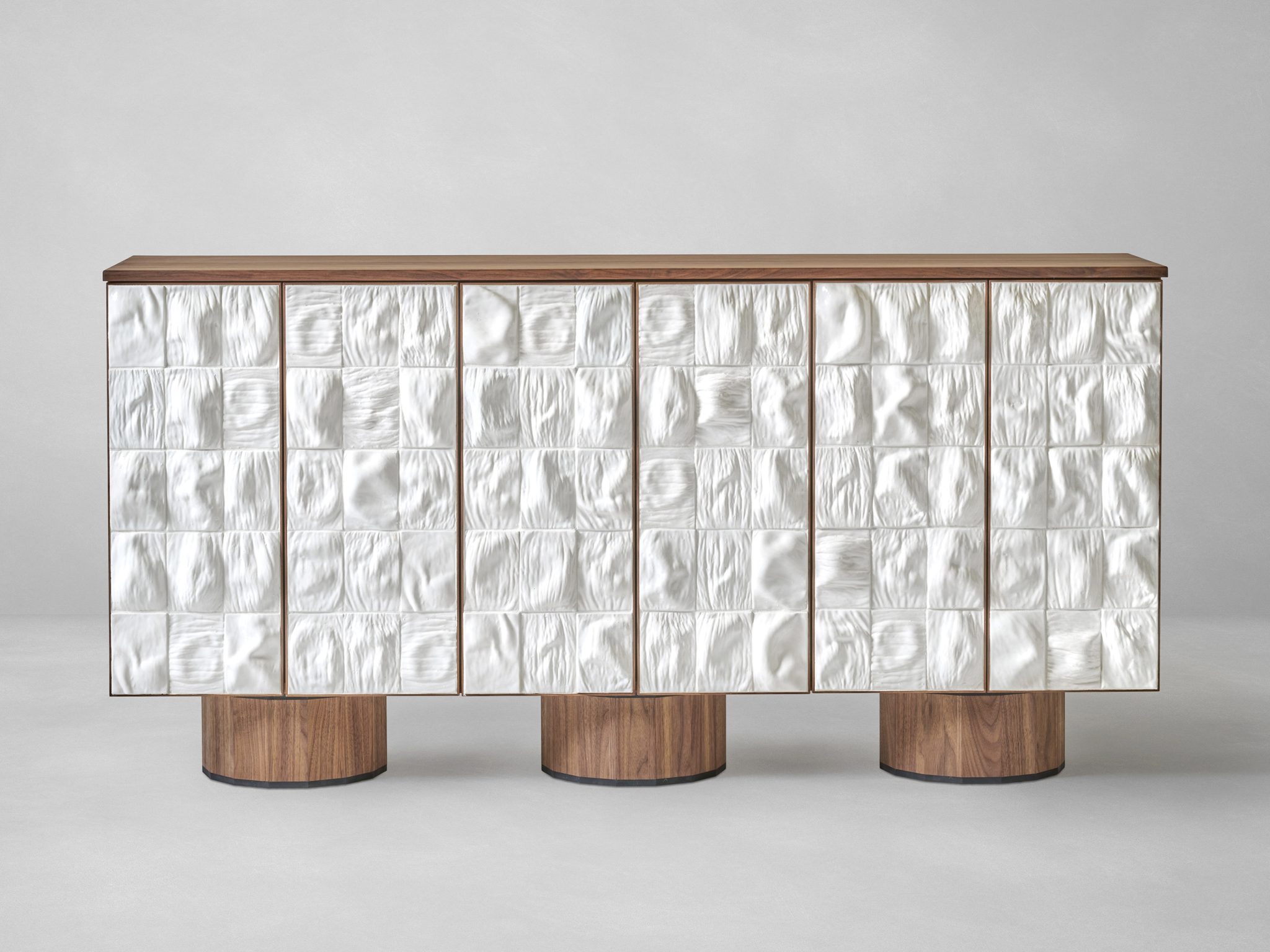
The melon skin is a good example. We’re fascinated by its impermanence—something ordinary that ripens, decays, and disappears. By translating its surface into ceramic and furniture, we transform something fleeting into something enduring. It is this tension between impermanence and permanence that continues to inspire us.
Experimentation and craftsmanship are inseparable in our practice. Transforming an organic surface into ceramic requires constant research, technical development, and refinement. What appears effortless is often the result of a long process of testing, failure, and discovery.
Many of your pieces seem to engage with notions of space, memory, and presence rather than pure functionality. What kind of emotional or sensory experience do you hope your work evokes in those who encounter it?
Above all, we hope our work evokes an emotional response. Whether people find it beautiful or unsettling matters less than whether it makes them feel something. To us, the value of a piece lies in its ability to create that connection.
The same openness applies to our own work. Our first impression is rarely definitive, and our perspective often changes with time and distance. We see that uncertainty as essential—it keeps curiosity alive and encourages us to keep looking, questioning, and discovering.
Looking ahead, how do you see your practice evolving? Are there new materials, scales, or contexts that you are particularly interested in exploring, and what questions are currently driving your research?
We are currently developing a new body of work in epoxy alongside a series of ceramic pieces, including a table, benches, and a cabinet that combines wood and ceramic. These projects have grown naturally from years of experimenting with ceramics, glazes, and mould-making, with each exploration leading to the next.
At the same time, we want to deepen our work with solid hardwood, focusing on traditional joinery and craftsmanship. In an increasingly automated world, we’re interested in reaffirming the value of the human hand—not out of nostalgia, but as a contemporary way of making. Rather than defining the outcome in advance, we prefer to leave room for discovery. That openness is where new ideas and new work emerge.